
- BloombergNEF 2025 New Energy Outlook, April 2025.
- IEA, “Data Centre Energy Use: Critical Review of Models and Results,” p.33, March 2025.
- IEA, “Electricity 2026: Demand, ”Data are for 2026-2030., February 6, 2026.
- P.9, International Energy Agency, “Renewable 2023, Analysis and forecast to 2028.” In 2023, an estimated 96% of newly installed, utility-scale solar PV and onshore wind capacity had lower generation costs than new coal and natural gas plants.
- P.12, Bloomberg NEF, “Levelized Cost of Electricity Update 2026”.
- P.11, Bloomberg NEF, “Levelized Cost of Electricity Update 2026”.
- Ember, “Global Electricity Review 2026,” p.16, April 21, 2026.
- Bloomberg BNEF, “Progress Despite Fragmentation: The Energy Transition to 2030,” January 6, 2026.
- Wood Mackenzie, “Gas turbine prices soar 195% as market faces supply-demand crisis,” April 1, 2026.
- US Dept of Energy, “Potential Cost Reduction in New Nuclear Deployments Based on Recent AP1000 Experience,” June 12, 2025.
- IRENA, “24/7 Renewables: The Economics of Firm Solar and Wind,” 2026.
Insights
How power demand is reshaping long-term infrastructure opportunities
The demand for power is accelerating – and the infrastructure built to meet it is becoming one of the more compelling opportunities in private markets. Electrification and digitalisation are changing how and where power is used, while renewables are stepping in where traditional energy sources fall short. Falling costs, energy security priorities and faster build times are converging in ways that may benefit investors with exposure to the right assets.
What energy transition assets may offer a portfolio:
- Cash flows supported by structurally rising electricity demand
- Potentially stable income linked to essential power infrastructure, supported by regulation and power purchase agreements
- Long-term growth potential driven by declining renewable energy generation costs and rapid deployment
The growing demand for power is not new, but its pace is accelerating
Widespread electrification and rapid digitalisation are driving a dramatic rise in demand for electricity. The following statistics highlight how quickly power demand is accelerating:

Electricity needs are projected to increase 75% by 2050.1

AI power use in data centres is likely to reach 200–400 TWh in 2030 (roughly the same amount of power consumed by Spain or the UK).2

Over the next five years, electricity demand is projected to grow about 50% faster each year than it did over the past decade.3
For investors, this demand supports long-term revenue visibility and sustained growth for power-related infrastructure assets.
Why renewables are increasingly filling the gap
Power demand is clearly rising, but supply is finding it harder to keep up. We believe renewables are part of the solution as they offer three compelling benefits:
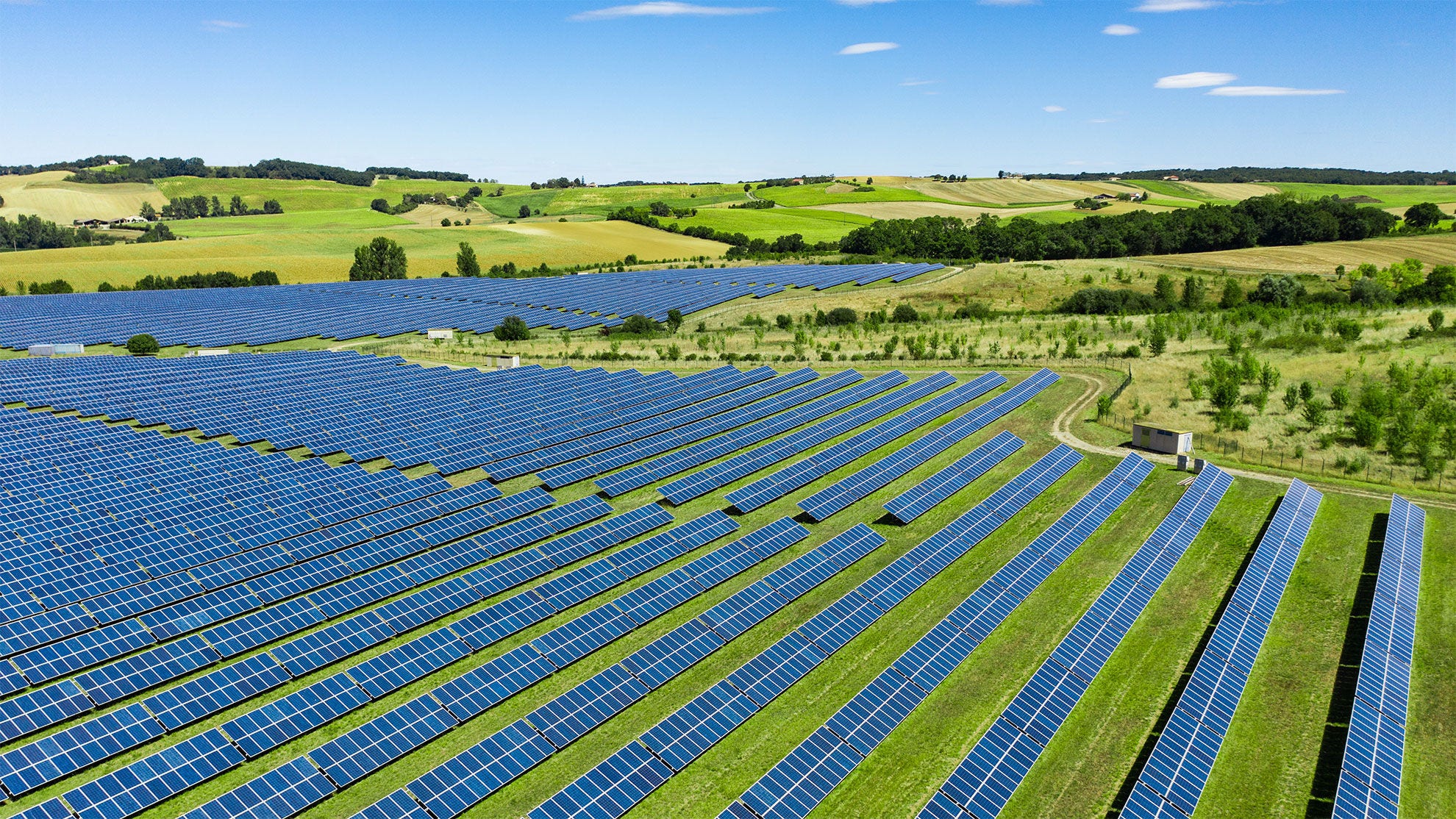
Improvements in technology and manufacturing efficiency have pushed renewable costs sharply lower.4 Wind and solar now represent some of the lowest cost sources of new power generation, even without subsidies (Figure 1). Over time, per‑unit costs for wind and solar are expected to continue declining (Figure 2), though there are regional variations. For example, wind and solar are already cheaper than new fossil‑fuel plants across much of China, India, Europe, and Latin America.5 In markets with abundant low‑cost fossil fuels or coal, like the U.S., renewables are increasingly filling the supply gap as traditional sources of power generation struggle to keep up with demand.6
Figure 1: Solar and wind now cost less than any other power source
 Source: BloombergNEF. “Levelized Cost of Electricity Update 2026.” Note: Global benchmarks are capacity-weighted averages using the latest market estimates. Offshore wind includes offshore transmission costs. Carbon pricing is included where policies are already active. Subsidies and tax credits are excluded. LCOE cost of electricity shown by financing date. CCGT is combined-cycle gas turbine, solar is fixed-axis photovoltaic solar. Nuclear data calculated as a simple average of US, China, Finland, France, UK and UAE as of 2025.

Chart takeaway
Lower generation costs can support more competitive economics and increase the likelihood of continued deployment at scale – reinforcing renewables as a structural growth investment.
Figure 2: Renewables will be 20-31% cheaper by 2035
 Source: BloombergNEF. “Levelized Cost of Electricity Update 2026.” Note: Global benchmarks are capacity-weighted averages using the latest market estimates. Offshore wind includes offshore transmission costs. Subsidies and tax credits are excluded. LCOE cost of electricity shown by financing date. Solar is fixed-axis photovoltaic solar.

Chart takeaway
Ongoing cost declines in wind, solar and batteries support their long-term growth potential rather than a subsidy driven cycle.
Geopolitical shocks and supply disruptions may accelerate a shift toward domestic energy sources. For fossil fuel-light regions such as Europe and parts of Asia, renewables and electrification offer a path to greater energy security and reduced exposure to global oil and gas markets – potentially supporting longer-term economic and strategic priorities.
This shift is already underway. Over the last 10 years, solar and wind power have grown at a double-digit annual rate – significantly faster than the 1% growth for coal and nuclear. In 2026, wind and solar are expected to exceed nuclear power output for the first time (Figure 3),7 and globally wind and solar installations are expected to increase by 67% over the next five years.8
However, building out renewable power capacity still relies on global supply chains for imports of turbines, solar panels and critical minerals. This dependence can create challenges for energy security and may increase the costs or extend timelines, especially if countries desire local sourcing. Experienced investment teams consider these risks when evaluating
Figure 3: In 2026, solar and wind will surpass nuclear output
 Source: Ember. Yearly electricity data from 2016-2025.

Chart takeaway
Renewables provide a more secure, domestic source of power for countries without fossil fuels, influencing how new power capacity is being built and generating durable cash flows for investors.
Traditional power sources face long development timelines, often taking years to come online. New gas turbines currently face lead times of around six years, with order books already full through 2027 – meaning projects initiated today are unlikely to come online before 2033.9 Nuclear facilities take even longer to develop – the last two nuclear plants in the US each took roughly a decade to complete construction, after they acquired licensing, approvals, and permits.10
In contrast, renewable capacity typically is quicker. Onshore wind and solar capacity face fewer potential bottlenecks and can be built within two years once permitting and grid connection are secured.11 Faster build times allow capital to be deployed and generate cash flows sooner.
The bottom line: Renewables offer a compelling investment opportunity
As demand for power increases, renewables are set to play a central role in meeting that need. Falling costs, energy security priorities and faster build timeframes have driven significant investment in the sector, and we believe these dynamics support continued opportunity.
For investors, this represents an attractive opportunity set within infrastructure – combining long-term demand visibility with improving economics and scalable deployment. Historically, these assets have delivered stable cash flows, defensive income, and capital appreciation. We see this as an opportunity to participate in the early stages of a new energy transition – this time linked to electrification and digitalisation.

Infrastructure insights
Discover how we are leveraging global trends to unlock new opportunities in alternatives investing – from rapid digitalisation and changing demographics to decarbonisation and sustainable development. Stay informed with the latest research, macroeconomic commentary and sector insights from our experts.
The opinions expressed are those of the author(s) as of the date indicated and may change based on market and other conditions. The accuracy of the content and its relevance to your client’s particular circumstances is not guaranteed.
This market commentary has been prepared for general informational purposes by the team, who are part of Macquarie Asset Management (MAM), the asset management business of Macquarie Group (Macquarie), and is not a product of the Macquarie Research Department. This market commentary reflects the views of the team and statements in it may differ from the views of others in MAM or of other Macquarie divisions or groups, including Macquarie Research. This market commentary has not been prepared to comply with requirements designed to promote the independence of investment research and is accordingly not subject to any prohibition on dealing ahead of the dissemination of investment research.
Nothing in this market commentary shall be construed as a solicitation to buy or sell any security or other product, or to engage in or refrain from engaging in any transaction. Macquarie conducts a global full-service, integrated investment banking, asset management, and brokerage business. Macquarie may do, and seek to do, business with any of the companies covered in this market commentary. Macquarie has investment banking and other business relationships with a significant number of companies, which may include companies that are discussed in this commentary, and may have positions in financial instruments or other financial interests in the subject matter of this market commentary. As a result, investors should be aware that Macquarie may have a conflict of interest that could affect the objectivity of this market commentary. In preparing this market commentary, we did not take into account the investment objectives, financial situation or needs of any particular client. You should not make an investment decision on the basis of this market commentary. Before making an investment decision you need to consider, with or without the assistance of an adviser, whether the investment is appropriate in light of your particular investment needs, objectives and financial circumstances.
Macquarie salespeople, traders and other professionals may provide oral or written market commentary, analysis, trading strategies or research products to Macquarie’s clients that reflect opinions which are different from or contrary to the opinions expressed in this market commentary. Macquarie’s asset management business (including MAM), principal trading desks and investing businesses may make investment decisions that are inconsistent with the views expressed in this commentary. There are risks involved in investing. The price of securities and other financial products can and does fluctuate, and an individual security or financial product may even become valueless. International investors are reminded of the additional risks inherent in international investments, such as currency fluctuations and international or local financial, market, economic, tax or regulatory conditions, which may adversely affect the value of the investment. This market commentary is based on information obtained from sources believed to be reliable, but we do not make any representation or warranty that it is accurate, complete or up to date. We accept no obligation to correct or update the information or opinions in this market commentary. Opinions, information, and data in this market commentary are as of the date indicated on the cover and subject to change without notice. No member of the Macquarie Group accepts any liability whatsoever for any direct, indirect, consequential or other loss arising from any use of this market commentary and/or further communication in relation to this market commentary. Some of the data in this market commentary may be sourced from information and materials published by government or industry bodies or agencies, however this market commentary is neither endorsed or certified by any such bodies or agencies. This market commentary does not constitute legal, tax, accounting or investment advice. Recipients should independently evaluate any specific investment in consultation with their legal, tax, accounting, and investment advisors. Past performance is not indicative of future results.
This market commentary may include forward-looking statements, forecasts, estimates, projections, opinions and investment theses, which may be identified by the use of terminology such as “anticipate”, “believe”, “estimate”, “expect”, “intend”, “may”, “can”, “plan”, “will”, “would”, “should”, “seek”, “project”, “continue”, “target” and similar expressions. No representation is made or will be made that any forward-looking statements will be achieved or will prove to be correct or that any assumptions on which such statements may be based are reasonable. A number of factors could cause actual future results and operations to vary materially and adversely from the forward-looking statements. Qualitative statements regarding political, regulatory, market and economic environments and opportunities are based on the team’s opinion, belief and judgment.
Other than Macquarie Bank Limited ABN 46 008 583 542 (“Macquarie Bank”), any Macquarie Group entity noted in this document is not an authorised deposit-taking institution for the purposes of the Banking Act 1959 (Commonwealth of Australia). The obligations of these other Macquarie Group entities do not represent deposits or other liabilities of Macquarie Bank. Macquarie Bank does not guarantee or otherwise provide assurance in respect of the obligations of these other Macquarie Group entities. In addition, if this document relates to an investment, (a) the investor is subject to investment risk including possible delays in repayment and loss of income and principal invested and (b) none of Macquarie Bank or any other Macquarie Group entity guarantees any particular rate of return on or the performance of the investment, nor do they guarantee repayment of capital in respect of the investment.
Past performance does not guarantee future results.
Diversification may not protect against market risk.
Market risk is the risk that all or a majority of the securities in a certain market – like the stock market or bond market – will decline in value because of factors such as adverse political or economic conditions, future expectations, investor confidence, or heavy institutional selling.
International investments entail risks including fluctuation in currency values, differences in accounting principles, or economic or political instability. Investing in emerging markets can be riskier than investing in established foreign markets due to increased volatility, lower trading volume, and higher risk of market closures. In many emerging markets, there is substantially less publicly available information and the available information may be incomplete or misleading. Legal claims are generally more difficult to pursue.
Currency risk is the risk that fluctuations in exchange rates between the US dollar and foreign currencies and between various foreign currencies may cause the value of an investment to decline. The market for some (or all) currencies may from time to time have low trading volume and become illiquid, which may prevent an investment from effecting positions or from promptly liquidating unfavourable positions in such markets, thus subjecting the investment to substantial losses.
Credit risk is the risk of loss of principal or loss of a financial reward stemming from a borrower’s failure to repay a loan or otherwise meet a contractual obligation. Credit risk arises whenever a borrower expects to use future cash flows to pay a current debt. Investors are compensated for assuming credit risk by way of interest payments from the borrower or issuer of a debt obligation. Credit risk is closely tied to the potential return of an investment, the most notable being that the yields on bonds correlate strongly to their perceived credit risk.
Index performance returns do not reflect any management fees, transaction costs or expenses.
Indices are unmanaged and one cannot invest directly in an index.
Macquarie Group, its employees and officers may act in different, potentially conflicting, roles in providing the financial services referred to in this document. The Macquarie Group entities may from time to time act as trustee, administrator, registrar, custodian, investment manager or investment advisor, representative or otherwise for a product or may be otherwise involved in or with other products and clients which have similar investment objectives to those of the products described herein. Due to the conflicting nature of these roles, the interests of Macquarie Group may from time to time be inconsistent with the interests of investors. Macquarie Group entities may receive remuneration as a result of acting in these roles. Macquarie Group has conflict of interest policies which aim to manage conflicts of interest.
All third-party marks cited are the property of their respective owners.
© 2026 Macquarie Group Limited
MCOL- 22973 - 3/2026
Macquarie Asset Management is a leading global asset manager offering a diverse range of investment solutions, including real assets, real estate, and credit.
This information is a general description of Macquarie Asset Management only. The views expressed in this website represent those of the relevant investment team and are subject to change. No information set out above constitutes advice, an advertisement, an invitation, a confirmation, an offer or a solicitation, to buy or sell any security or other financial product or to engage in any investment activity, or an offer of any banking or financial service. Some products and/or services mentioned on this website may not be suitable for you and may not be available in all jurisdictions.
Investing involves risk including the possible loss of principal. The investment capabilities described in this website involve risks due, among other things, to the nature of the underlying investments. All examples herein are for illustrative purposes only and there can be no assurance that any particular investment objective will be realized or any investment strategy seeking to achieve such objective will be successful. Past performance is not a reliable indication of future performance.
Before acting on any information, you should consider the appropriateness of it having regard to your particular objectives, financial situation and needs and seek advice.
Other than Macquarie Bank Limited ABN 46 008 583 542 (“Macquarie Bank”), any Macquarie Group entity noted in this website is not an authorized deposit-taking institution for the purposes of the Banking Act 1959 (Commonwealth of Australia). The obligations of these other Macquarie Group entities do not represent deposits or other liabilities of Macquarie Bank. Macquarie Bank does not guarantee or otherwise provide assurance in respect of the obligations of these other Macquarie Group entities. In addition, if this website relates to an investment, (a) the investor is subject to investment risk including possible delays in repayment and loss of income and principal invested and (b) none of Macquarie Bank or any other Macquarie Group entity guarantees any particular rate of return on or the performance of the investment, nor do they guarantee repayment of capital in respect of the investment.
Additional important information (including regional disclosures)
[3246420]