
Our People
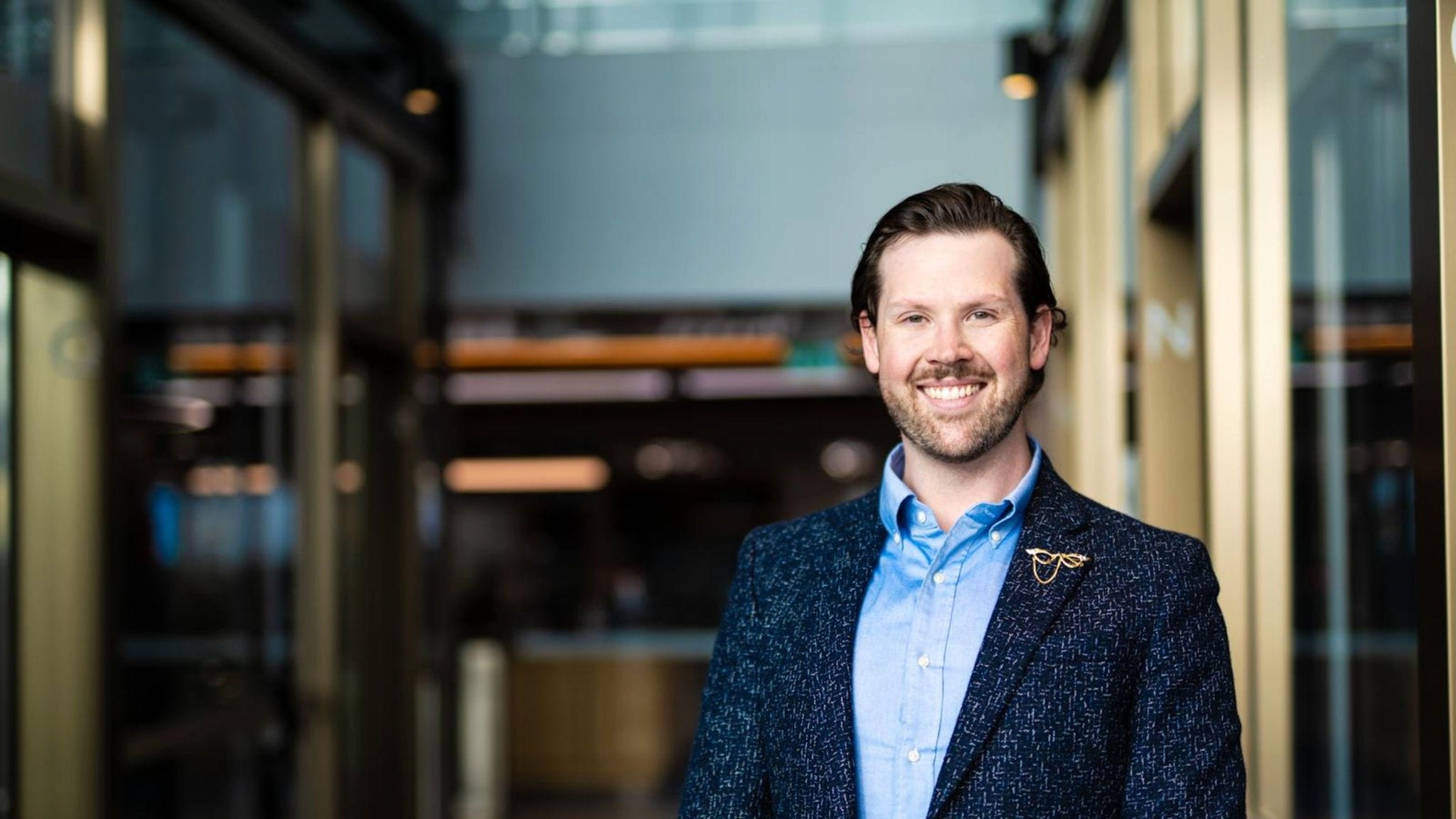
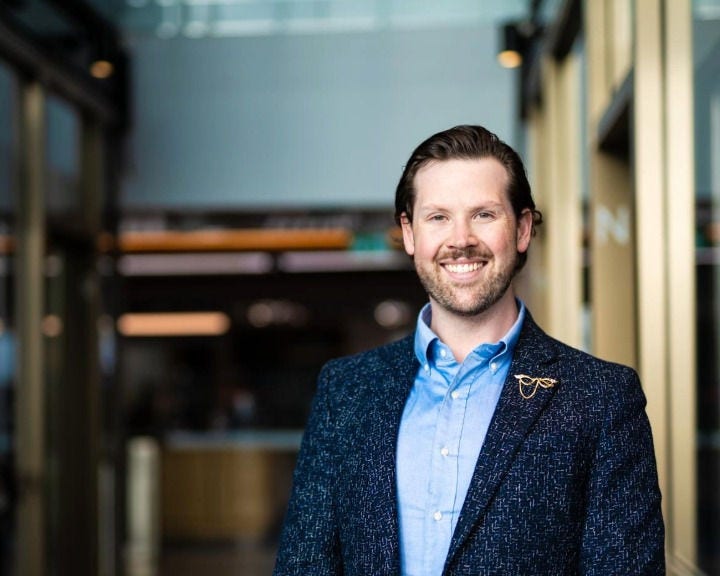
From storytelling to inclusive design: how Liam O’Kane is shaping digital accessibility at Macquarie
18 August 2026
Liam O’Kane has built a career at the intersection of creativity, technology and inclusion. From his early experiences noticing everyday accessibility barriers, to his work shaping Macquarie’s global accessibility program, he brings a unique mix of storytelling, technical expertise and empathy to designing digital experiences that work for everyone.
When Liam O’Kane talks about accessibility, he doesn’t start with standards, frameworks or code. He starts with people.
“My grandfather always watched cricket with captions on,” he recalls. “Not because he couldn’t hear the TV but because it allowed him to listen for the front door at the same time.”
It’s a small detail, but for Liam it was the first time he understood how environments, physical or digital, can unintentionally create barriers. Growing up around family members and friends who were neurodivergent, he developed a deep awareness of how easily people can be excluded by design.
“I didn’t have the word for it then,” he says, “but I knew it didn’t feel right. It stayed with me.”
That early intuition would one day become the foundation of Liam’s work in digital accessibility at Macquarie. However, his journey to this point was far from linear.
A career built at the intersection of creativity and technology
Before joining Macquarie, Liam spent years in film, TV and visual effects, crafting long‑form and short‑form stories and navigating the pace and precision of production deadlines.
“In film, you work to a strict waterfall schedule. Everyone depends on everyone else getting their piece right, at the right time,” he says.
He later transitioned into front‑end development, drawn to the challenge of merging creativity and logic. Studying full‑stack engineering gave him the technical grounding and his VFX background trained him to work efficiently, iterate quickly and design intuitive experiences.
“I was taught early to use shortcuts and hotkeys so you could build fast without compromising quality. That mindset is huge in accessibility: efficiency and consistency reduce errors, and errors create barriers.”
Macquarie stood out to him because it allowed both sides of his skillset, creative storytelling and technical problem‑solving, to coexist.

The work here balances innovation with responsibility, it’s a space where those two worlds come together.”
Designing for everyone: accessibility at Macquarie
Today, Liam sits within Macquarie’s Brand team, working on a global accessibility program that spans products, services and Macquarie’s Global Experience Language (GEL). His role blends advocacy, consultation and enablement across the organisation.
“People often think accessibility is just colour contrast or font sizes,” he says. “It’s far more than that. It affects every digital product we create and every person who interacts with it.”
He supports product teams in applying the Web Content Accessibility Guidelines (WCAG) - internationally recognised standards for making digital content accessible to people with disabilities – and aligning with regional requirements, such as the upcoming European Accessibility Act. That means reviewing components using screen readers, working closely with developers on semantic structures, guiding testers through accessible Quality Assurance (QA) processes, and coaching product teams to avoid future tech debt.
Recently, Liam led an accessibility audit across Macquarie’s digital platforms in India to help create more universally accessible experiences. The work identified key areas for improvement and supported remediation plans to make platforms easier to use, while helping teams meet accessibility expectations and reduce the risk of future issues.
For Liam, the aim is to make accessibility part of the design process from the beginning.
“In all my work, my goal is to stop accessibility being something we ‘add later’. When you do that, you inevitably end up having to rebuild it in the future. To avoid that, I’m helping teams design right the first time.”
Building capability across teams
Liam spends much of his time upskilling people across Macquarie, from London to Sydney, running sessions that make accessibility feel approachable rather than intimidating.
“I always start with a quote from the musical Kinky Boots: ‘You can change the world when you change your mind.’ That applies here, accessibility starts with shifting how we think.”
His training goes beyond WCAG checklists. He teaches people how disciplines intersect, drawing parallels from his time in film: how layout artists set up animators, who set up lighting designers, who set up compositors.
“It’s the same here. A business analyst can set up a designer. A designer can set up a developer. A quality assurance analyst can set up a product owner. We become better when we understand each other’s roles.”
His team is also developing a tool that helps teams conduct audits, understand remediation steps and the ‘why’ behind accessibility requirements.
“It’s about giving people confidence, not just instructions.”
Dancing, dementia, and the power of community
Outside of work, Liam’s passion for dance deeply shapes his approach.
A lifelong athlete across rugby, cricket, softball, netball and dance, he recently served as dance captain for a production of Kinky Boots. He has even brought that passion into Macquarie, running dance classes to raise funds for Dementia Australia.
“In a studio, you enter a space where it’s safe to learn, safe to fail, safe to challenge yourself,” he says. “That’s the culture I want to bring into my work.”
He sees a direct parallel between dance and accessibility.
“Both require discipline, empathy and attention to detail. Both are about moving in ways that work for different abilities.”
He often reminds teams that accessibility is about noticing moments where a small action can remove a barrier, parallelling it to opening a door for someone juggling a laptop and a coffee.
“It sounds small, but accessibility is built on small, everyday choices that make someone else’s world easier.”
Growing with a fast‑moving field
One of the biggest lessons Liam has learned is that accessibility is never “done”.
“Nothing will ever be 100 per cent accessible. Technology just evolves too fast, especially with AI. But we keep iterating. That’s what makes the work exciting.”
Since joining Macquarie, Liam says he’s developed flexibility, curiosity and a holistic view of inclusive design, assessing how products behave across devices, browsers, screen readers, authentication flows and user needs.

I’m constantly learning. Macquarie reinforces that growth by giving me room to experiment, to question, to build better.”
A supportive environment
He describes working at Macquarie through the same dance studio analogy that has shaped so much of his approach to inclusion and growth.
“It’s an environment that feels secure and safe to learn but isn’t afraid to challenge you. You might dive into the deep unknown, but someone is always there, supporting you and helping you grow.”
For Liam, accessibility isn’t a checklist. It’s a mindset, a practice and a responsibility shared by everyone.
His work at Macquarie brings together his background as a storyteller, developer, dancer and advocate, enabling him to create digital experiences that work better for everyone.

Explore opportunities within our teams in Financial Management, People and Engagement

Apply now
Ready to start your career with Macquarie?


Frequently Asked Questions
Have a question about the recruitment process or working at Macquarie?