
Perspectives
Turning capital into infrastructure through partnership
Article highlights
- Strong economic foundations give Ireland an opportunity to invest for long-term resilience and competitiveness.
- Well-designed partnerships can add delivery capacity and specialist expertise while retaining public accountability.
- Social infrastructure, energy-market capability and circular-economy solutions show how capital can support practical outcomes.
- Macquarie’s teams in Ireland provide investment capital, manage strategic infrastructure investments and support Irish companies with their hedging and financing needs.
10 November 2026
Holding the EU Presidency for the eighth time, Ireland does so from a position of economic and financial strength that sets it apart from much of Europe. It has one of the fastest-growing economies in the eurozone and last year recorded a fiscal surplus for the fourth time in a row.

Stripping out the distortions created by multinational activity, the OECD expects Ireland’s economy to grow by 2.1 per cent in 2026 and 2.5 per cent in 20271 – substantially above forecasts for the eurozone as a whole (0.8 per cent in 2026 and 1.2 per cent in 2027).2
The question for Ireland is how to convert that economic strength into the infrastructure and services needed to sustain its next phase of growth. Like many of its European peers, public investment has not kept pace with the country’s changing societal, technological and energy demands.
Turning capital into infrastructure through partnership
Ireland’s growing population and evolving economic needs are increasing demand for modern infrastructure across education, healthcare, housing and transport.
Recognising the role that private capital and expertise can play alongside public investment, the Irish government has used public-private partnerships (PPPs) to support the delivery and long-term management of infrastructure across the country.
“Ireland’s next phase of growth will depend on delivering transport and social infrastructure at greater scale and pace. PPPs are particularly valuable in a market such as Ireland because they bring in specialist delivery expertise and long-term accountability alongside private capital,” says Gemma McRann, a Dublin-based Managing Director at Macquarie Capital.
McRann adds: “PPPs attract providers who can offer best-in-class construction and operational delivery through capabilities that complement those of the public sector. They also bring a long-term perspective that extends beyond delivery to managing an entire project lifecycle over 25 years or more.”
Since 2009, Macquarie Capital has participated in PPP projects in Ireland spanning education, housing and other social infrastructure, applying its capital, financial advisory and project delivery capabilities to support public-sector partners. It has also been involved in many large-scale transport infrastructure projects initiated across Europe in recent years.
Working in partnership with JJ Rhatigan & Company and Sodexo Ireland Limited, Macquarie Capital oversaw the successful delivery of six new higher education facilities across Ireland, through Higher Education PPP Bundle 1. Macquarie Capital acted as equity sponsor and exclusive financial adviser to the consortium.
The €250 million project encompassed the design, construction, financing, operation and maintenance of the facilities over a 25-year concession period following construction. Providing more than 38,000 m² of additional campus space for more than 5,000 students, the new buildings support practice-based learning in STEM, ICT, engineering and life sciences.
The facilities are part of the Irish government’s Project Ireland 2040, which sets out ambitions to improve the quality of life for its people by investing in comprehensive social, economic, and cultural infrastructure across the country.

In recent years, the Irish government allocated a record level of funding to healthcare to deliver increased capacity and support the sector’s transformation.3,4
Complementing public investment has been private capital, such as the acquisition of Beacon Hospital in 2024 by Macquarie Asset Management through a fund it manages. One of the most technologically advanced private hospitals in Europe, it provides acute care and specialist diagnostic services to more than 230,000 patients each year.5
“Beacon is one of Ireland’s most technologically advanced private hospitals. Since we acquired it via one of our managed funds, we’ve been working with the management team to support plans to expand its facilities and give more patients access to its leading care facilities,” says Hani Zogheib, a Senior Managing Director at Macquarie Asset Management.
“This includes new clinical infrastructure across the existing campus, including a day-case theatre, hybrid operating theatre, Neuro Interventional Radiology laboratory and expanded breast centre,” adds Zogheib.
Drawing on its experience investing in essential social infrastructure on behalf of long-term investors, Macquarie Asset Management invested in Beacon Hospital in 2024 via a managed fund. This investment supports the continued growth of one of Ireland's private hospitals and its ambition to expand healthcare capacity, specialist expertise and advanced clinical facilities.
Through long-term ownership and active stewardship, Macquarie is supporting continued investment in healthcare infrastructure, technology and specialist services to help meet the evolving healthcare needs of communities across Ireland.

Investing in climate and energy solutions
In common with many developed economies, Ireland is facing the energy trifecta of needing to evolve its energy system to increase reliability, affordability and sustainability.
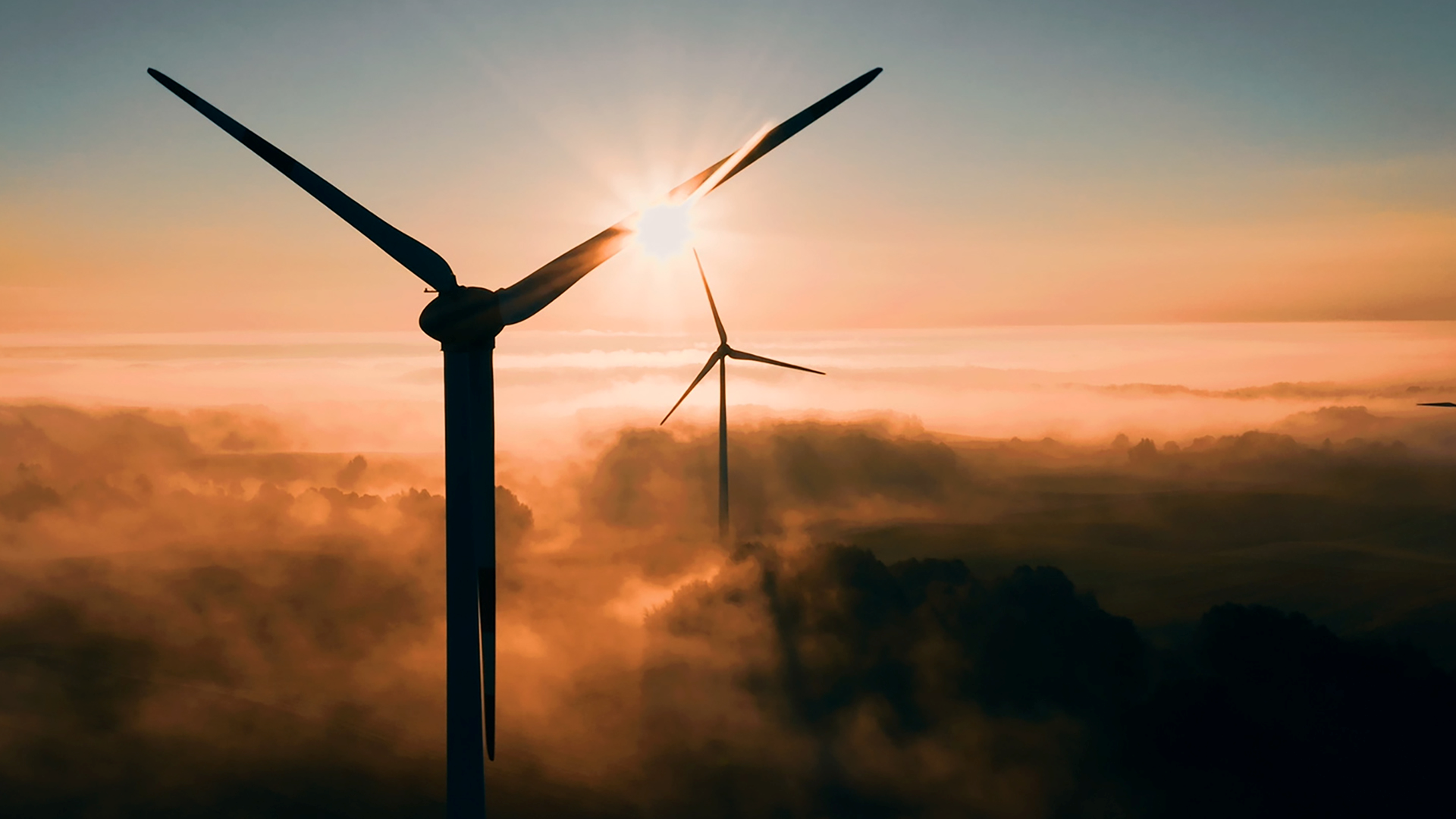
As part of Ireland’s Climate Action Plan, it has set a target of 80 per cent of electricity generated from renewable sources by 2030 and almost all coming from wind, solar, storage and imports by 2035.6 With ambitions to expand its housing stock, and digital infrastructure such as data centres growing their consumption (to 23 per cent, from 5 per cent in 20157), record levels of investment are required to upgrade and expand its energy infrastructure.8
In 2025, Macquarie’s Commodities and Global Markets business acquired Erova Energy Group, a renewable asset optimisation company operating as a standalone business in Ireland and the UK.9
Erova Energy Group has a specialist asset optimisation platform, long-standing customer relationships and technology capabilities, with access to Macquarie’s global energy market, financial and risk management expertise.
Erova provides route-to-market services including provides power purchase agreements, trading, balancing services and energy logistics to renewable energy assets across the UK and Ireland, supporting the growth of wind, solar, waste-to-energy and battery storage infrastructure.
Beyond generation, the energy transition also creates opportunities to recover more value from waste. Macquarie Asset Management has worked with Panda, a waste-to-resource business held by a managed fund, which manages 4.9 million tonnes of waste annually across Ireland, the UK and the Netherlands, supporting initiatives that convert organic waste and waste wood into energy.10
 Waste sorting and recycling operations at Panda’s facility in Dublin, Ireland.
Helping businesses navigate market volatility
As the European base for more than 1,800 multinational companies, including global leaders in the technology, pharmaceutical and financial services sectors, Ireland has become one of Europe’s key financial centres.
Providing a range of hedging and risk management solutions, Commodities and Global Markets helps institutional and corporate clients manage foreign exchange exposures and energy and agricultural commodity risk.
“Given the current volatility in global markets, our solutions help clients across Europe manage their exposure to price changes in commodities, currencies, credit and equity markets,” says Andrew Gates, Chief Executive Officer of Macquarie Bank Europe.
“Irish clients face exposures shaped by the features of the country’s energy system and export-focused economy. In energy, we help clients manage risks linked to volatile global markets, while our dairy hedging solutions can help producers, processors and buyers manage price risk. Across much of what we do, we tailor solutions to a client’s specific exposure,” says Gates.
Macquarie also supports local corporates and many market participants through its digital trading platform, Aurora, which provides access to currency and commodity products and services.
“Aurora allows clients to see their exposures and provides transparent prices and market access, enabling them to trade seamlessly, and then takes care of all the post-trade functions,” says Bevan Murray, Global Head of eSales, Commodities and Global Markets.
Local presence, connected capability
Macquarie has been present in Ireland for more than 20 years and recently reaffirmed that commitment with the opening of a new office in Dublin, bringing together more than 70 colleagues.
The office is also the headquarters for Macquarie Bank Europe (MBE), which undertakes Macquarie’s regulated banking activities for EU-based clients.
“Macquarie’s ongoing investments in Ireland and its talent, both directly and via Macquarie funds, reflect our confidence in it as a strategic location and ensures we have the capabilities needed to support our local clients,” says Gates.
Looking ahead
Ireland’s next phase of growth will depend on connecting long-term capital and specialist expertise with the right projects and partnership models. For government and the private sector, the opportunity is to identify where this can most effectively complement public investment and turn Ireland’s economic strength into practical, lasting outcomes.
 Marking the opening of Macquarie’s Dublin office. From left: Andrew Gates, Chief Executive Officer of Macquarie Bank Europe; Chantelle Taylor, Australian Ambassador to Ireland; Rachel Palmer, EMEA CEO, Macquarie Group; Michael Lohan, CEO of IDA Ireland; and Gemma McRann, Managing Director in Macquarie Capital.
Macquarie in Ireland
All three of Macquarie’s international businesses are represented in Ireland.
Macquarie Asset Management invests in infrastructure and private market opportunities in Ireland, including across healthcare, energy and waste management.
Macquarie Capital provides advisory, development and principal investment capabilities, including supporting the delivery of social and economic infrastructure through public-private partnerships.
Commodities and Global Markets provides Irish and European institutional and corporate clients with funding, energy market services and risk management solutions across commodities and currencies.
- ‘Ireland: OECD Economic Outlook, Volume 2026 Issue 1’, Organisation for Economic Co-operation and Development, June 2026, https://www.oecd.org/
- ‘Euro area: OECD Economic Outlook, Volume 2026 Issue 1’, Organisation for Economic Co-operation and Development, June 2026, https://www.oecd.org/
- ‘Minister for Health approves publication of HSE's Capital Plans’, Department of Health, 24 February 2026, https://www.gov.ie/
- ‘Ireland Country Commercial Guide: Healthcare’, U.S. International Trade Administration, 2 February 2026, https://www.trade.gov/
- ‘About Us’, Beacon Hospital, https://www.beaconhospital.ie/
- ‘Powering Ireland’s Energy Future: Executive summary’, International Energy Agency, 18 December 2025, https://www.iea.org/
- ‘Data Centres Metered Electricity Consumption 2025’, Central Statistics Office, 7 July 2026, https://www.cso.ie/
- ‘CRU Approves Record Investment in Ireland’s Electricity Grid and Network’, Commission for Regulation of Utilities, 16 December 2025, https://www.cru.ie/
- Erova Energy is a subsidiary of Macquarie Group, operating as a standalone business with dedicated management, governance and operational frameworks.
- ‘Redefining Waste: Panda’s Latest Sustainability Report’, Panda, 11 August 2026, https://www.panda.ie/


