
Macquarie Group Collection
Emerging Artist Prize online exhibition
Congratulations to the 2026 Macquarie Group Emerging Artist Prize winners and finalists.
2026 finalists
Please note:
- The payment for the art is directly between the buyer and the artist, with no involvement from Macquarie.
- The artist's price for each work is GST inclusive, where appropriate.
- Macquarie has not added commission to the artist's price.
- The costs for packing and/or transport are not included in the price, with arrangements to be mutually agreed between the buyer and seller.
Exhibition
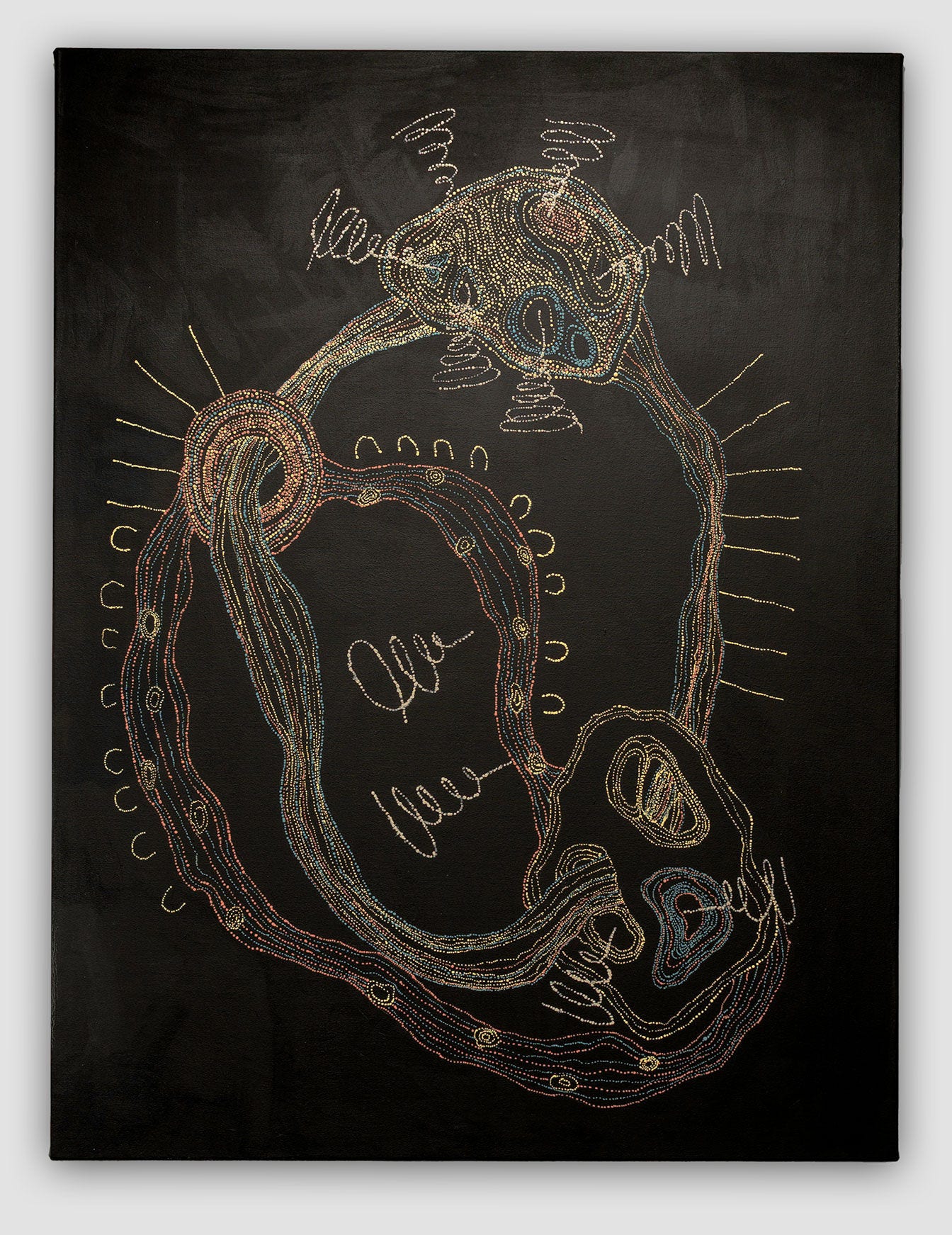
Born in Alice Springs, Rita Norman is an emerging Anangu artist who now lives and works in Kaltukatjara/Docker River. Her painting practice is grounded in the Country, stories and family knowledge passed down to her through the generations. Depicted here is Tjitji Ngatingka, the second creek beyond Uluru on the way to Kaltukatjara. Like most of her work, it speaks to Tjitji Tjukurpa, the Kids Creation Story. According to the artist: “When you camp here you can hear those children, who walked up from down south during the creation times. They couldn’t decide where to go next, so they stayed there and turned into the rocks and creeks.”
- Instagram: @tjarlirliart
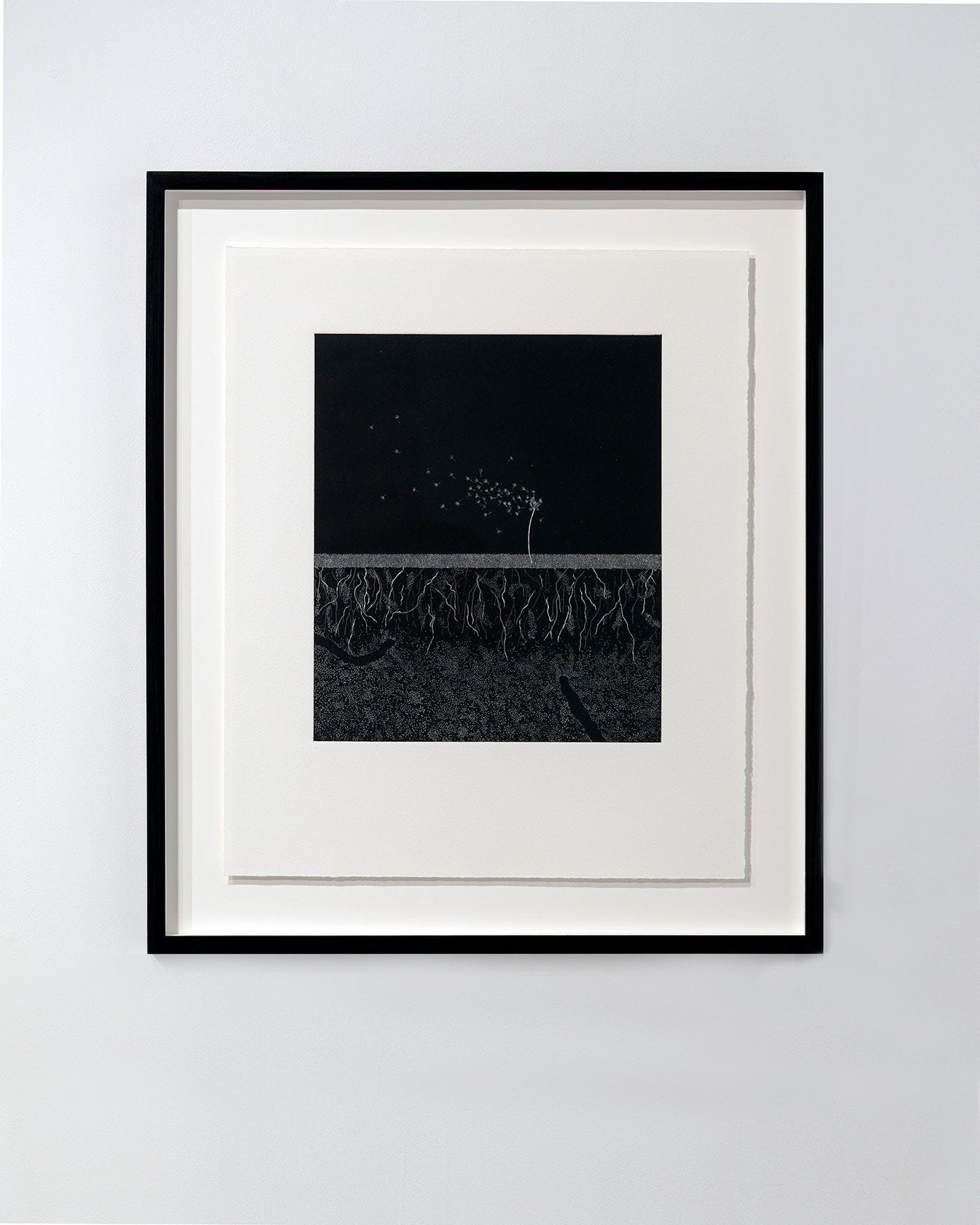

Low Tide, 2026
relief etching
33 x 56.5 cm
Edition of 7
$A500 (unframed)
$A780 (framed)
Melbourne artist Fiona Davey explores in her practice the quietude and complexity of nature’s microenvironments. Beneath the Dandelion was inspired by the observation of a dandelion just as a gust of wind scattered the pappus, carrying the seeds into the air.
The work contemplates the cyclical nature of plants, showing the soil and roots beneath the grass that nurture the dandelions’ growth, each element performing a specific role in the ecosystem with quiet purpose. Low Tide, in contrast, is an interpretation of something that feels unknown and bigger than oneself. The tidal patterning is viewed close-up, while the expanse above alludes to the open ocean that seems to extend endlessly.
- Instagram: @fdavey_art
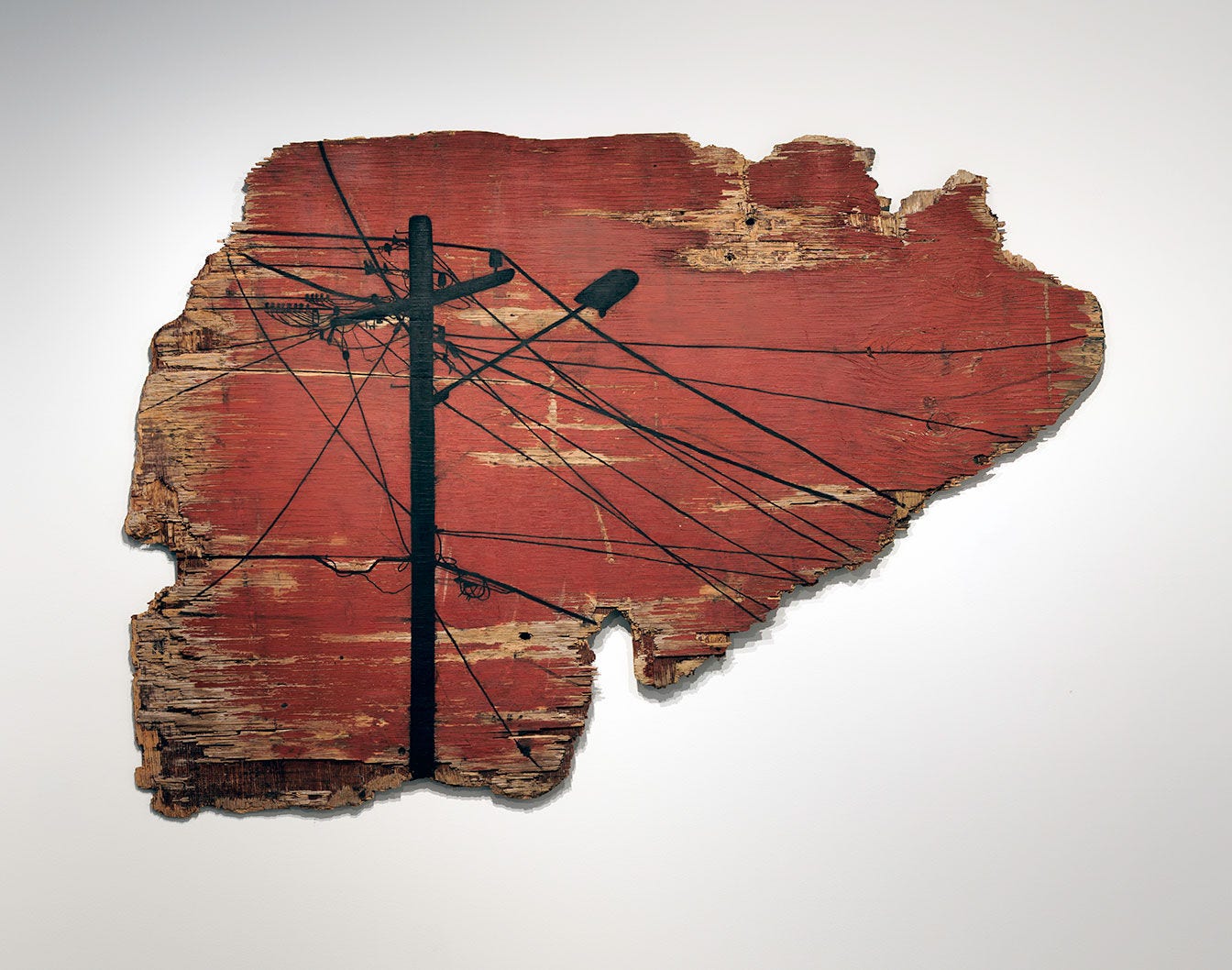
Sydney’s nocturnal streets, illuminated skies, graffitied walls and intricate powerlines are aspects of the everyday environment explored in Clare Mueller’s practice. Silhouette (power pole) expands on this theme by repurposing found ‘street trash’ (the wooden board) into art. For Mueller, who graduated from the National Art School in 2019, powerlines represent the beating heart that connects the veins of our city ecosystems, pulsing life into our homes, workplaces and urban infrastructures. At first glance a seemingly mundane image, this work captures the tree-like structure and sometimes eerie presence of these ubiquitous and visually dominant wired beasts on which we depend.
- Instagram: @cllare.m
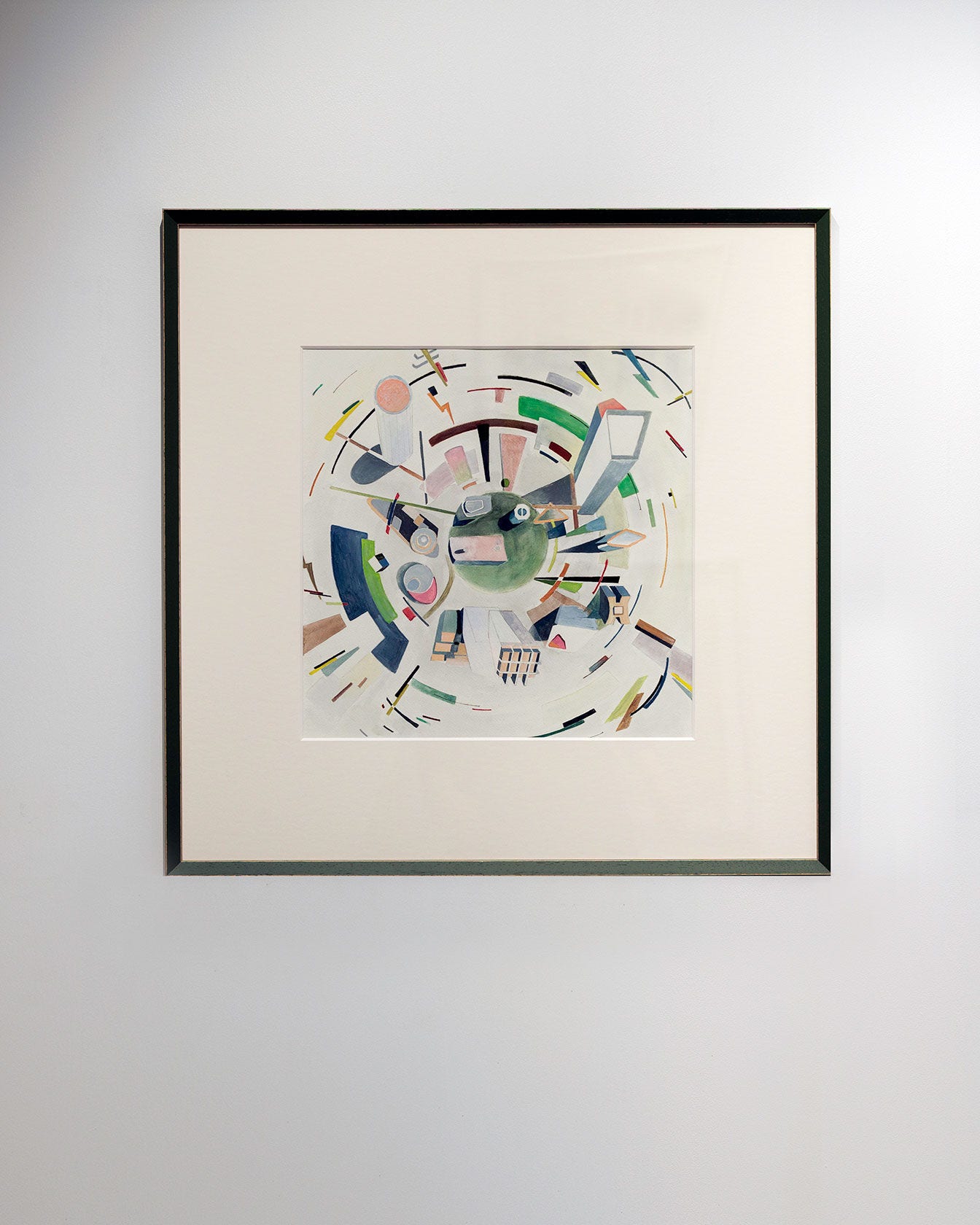
National Art School student Mingming Bianca reimagines Sydney’s CBD from a bird’s eye perspective, transforming familiar architectural landmarks such as Governor Phillip Tower, Quay Quarter Tower and Australia Square into an abstract, dynamic and rotating landscape. The result evokes a psychological terrain where memory, time, gravity and everyday human activities intersect. Influenced by Suprematism and Constructivism, the artist investigates the tension between order and movement by creating a circular composition of fragmented geometric forms orbiting across the picture plane. It generates a sense of perpetual motion, reflecting both the rhythms of urban life and spinning of the Earth.
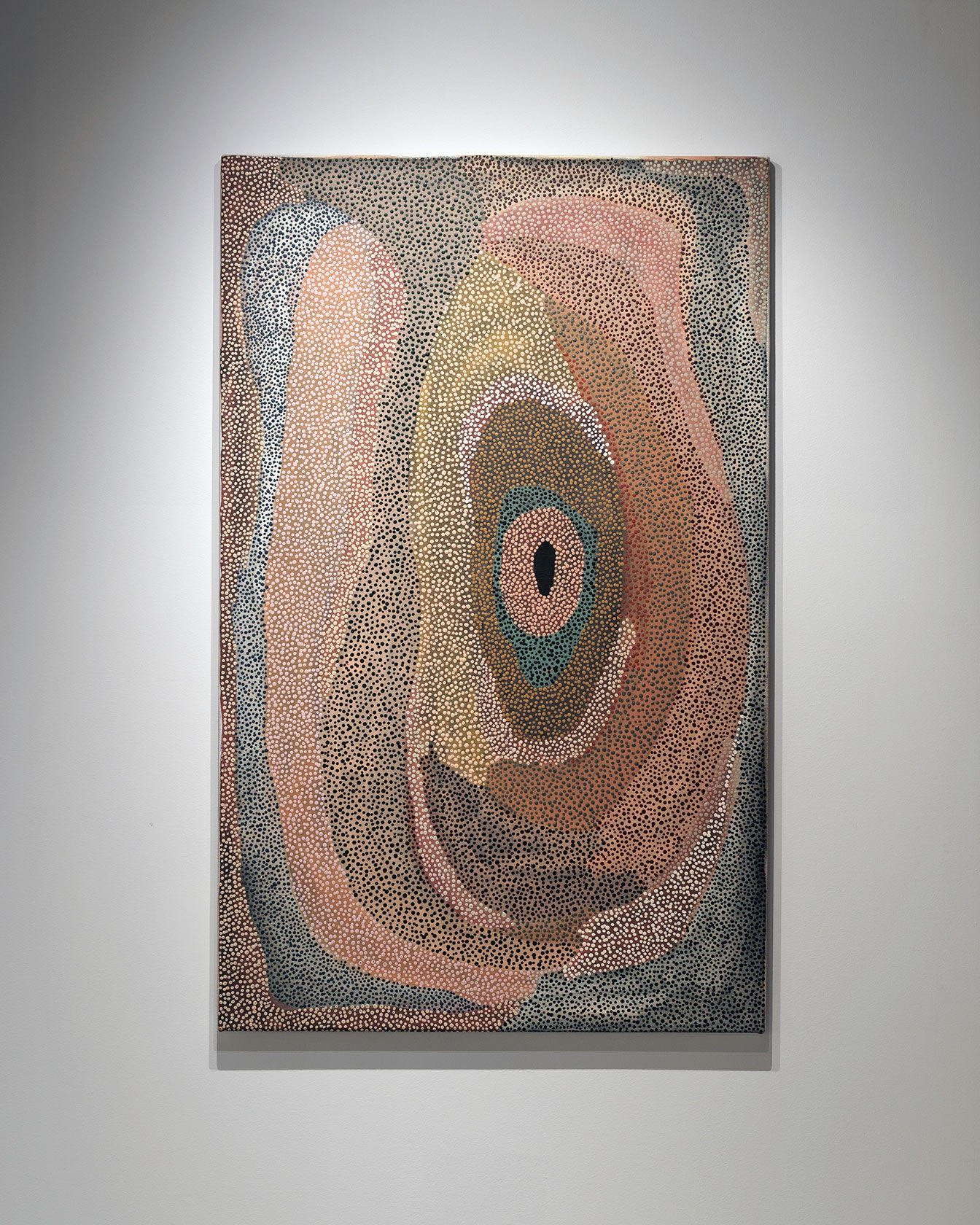
This work depicts two sites that form part of Marianne Burton’s ngurra through her great-great grandparents. The Western Desert term ngurra denotes birthplace and belonging, but can also refer to a body of water, a camp site or a large area of Country. People identify with their ngurra in terms of specific rights and responsibilities, and the possession of intimate knowledge of the physical and cultural properties of one’s Country. Painting ngurra has today become an important means of cultural maintenance. Physical maintenance of one’s ngurra, like cultural maintenance, ensures a site’s wellbeing, and is a responsibility of the people belonging to that area.
- Instagram: @martumiliartists
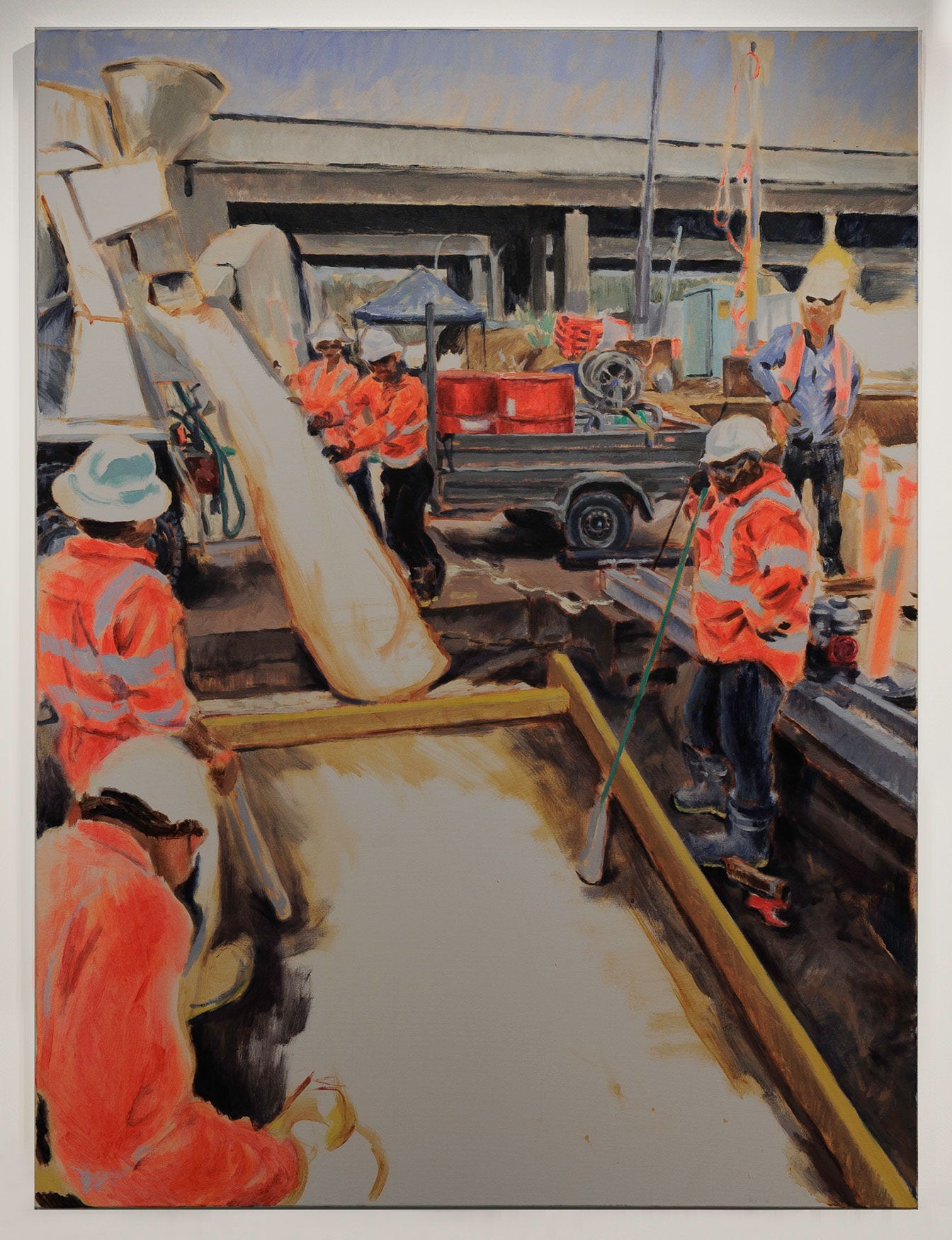
In replacing Australia’s natural biodiversity with flat suburban precincts, artist Renat Dudziak believes that we are replicating terrestrial ‘coral bleaching’ events across the country. Her painterly application of pigment to represent greenery and sky behind the stiffly posed tradesmen lends this painting an uncanny, stage-like quality, while also drawing on conventions of Australian Impressionism. The unfinished quality of the work mirrors Sydney’s perpetual state of flux and represents the vacuum left behind by increasingly extractive urbanisation.
The child-like quality of the painting is a nod to just how young and nearsighted Sydney’s urbanisation is, and to the disruptive nature of constant construction and road closures.

Asquith nocturne, 2025
oil on canvas
30 x 40cm
$A950 (SOLD)

Kitchen at night, 2026
oil on canvas
45.5 x 61 cm
$A1,500 (SOLD)
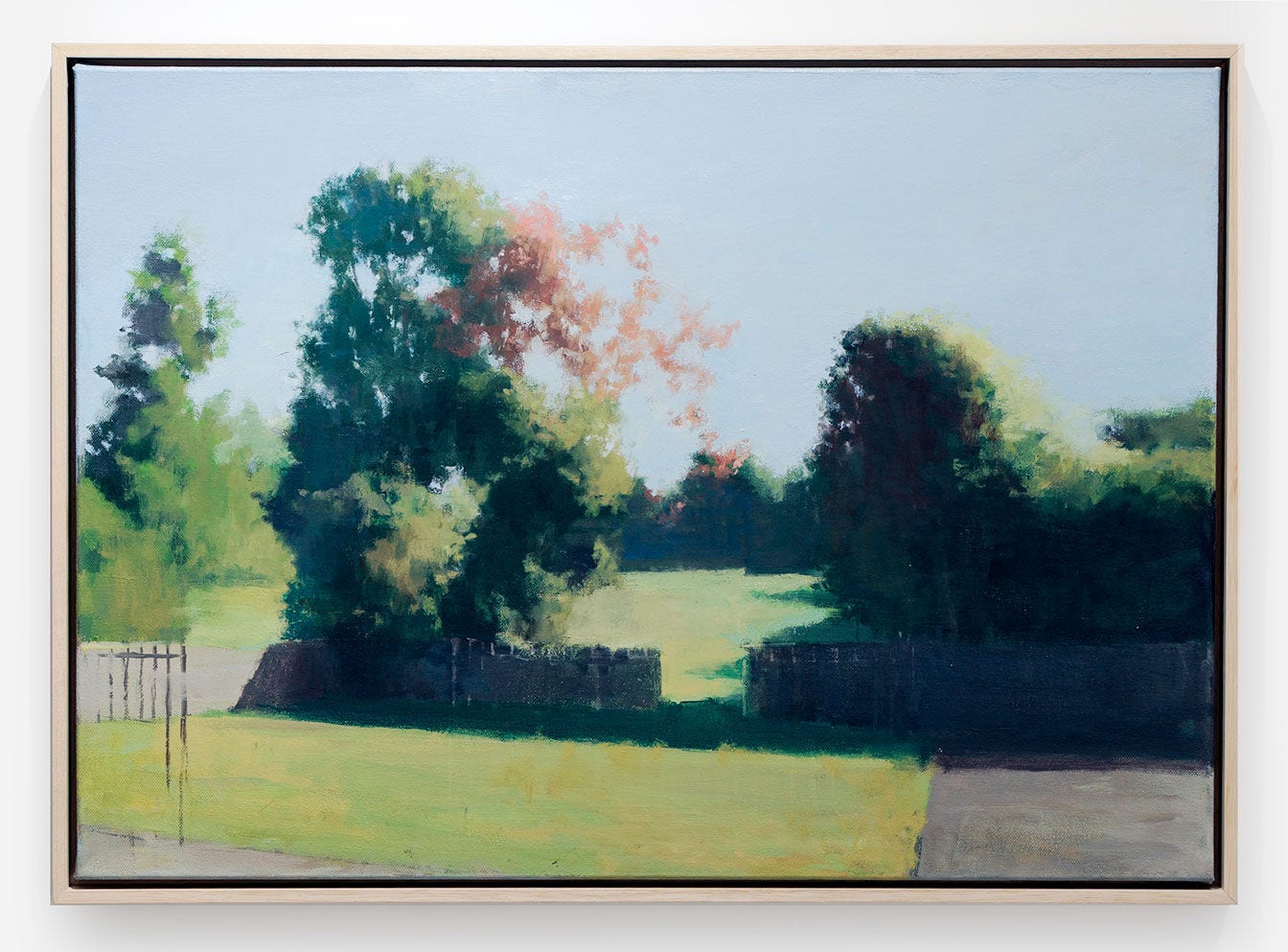
Sydney artist Edward Essing’s paintings explore mnemonic and emotional responses to place, revealing how light, colour and form can shape our experience of daily encountered environments. The bright open field and blurring tree forms in Autumn landscape create a sense of distance and fleeting, nostalgic recollection, while Asquith nocturne uses tonal contrast to capture the psychological depths of nocturnal light. Extending this inquiry to quotidian domestic spaces, Kitchen at night embodies Essing’s growing interest in the atmospheric potential of home interiors. In all images, the land becomes less about physical geography and more about mood and perception.
- Instagram: @edwardessing
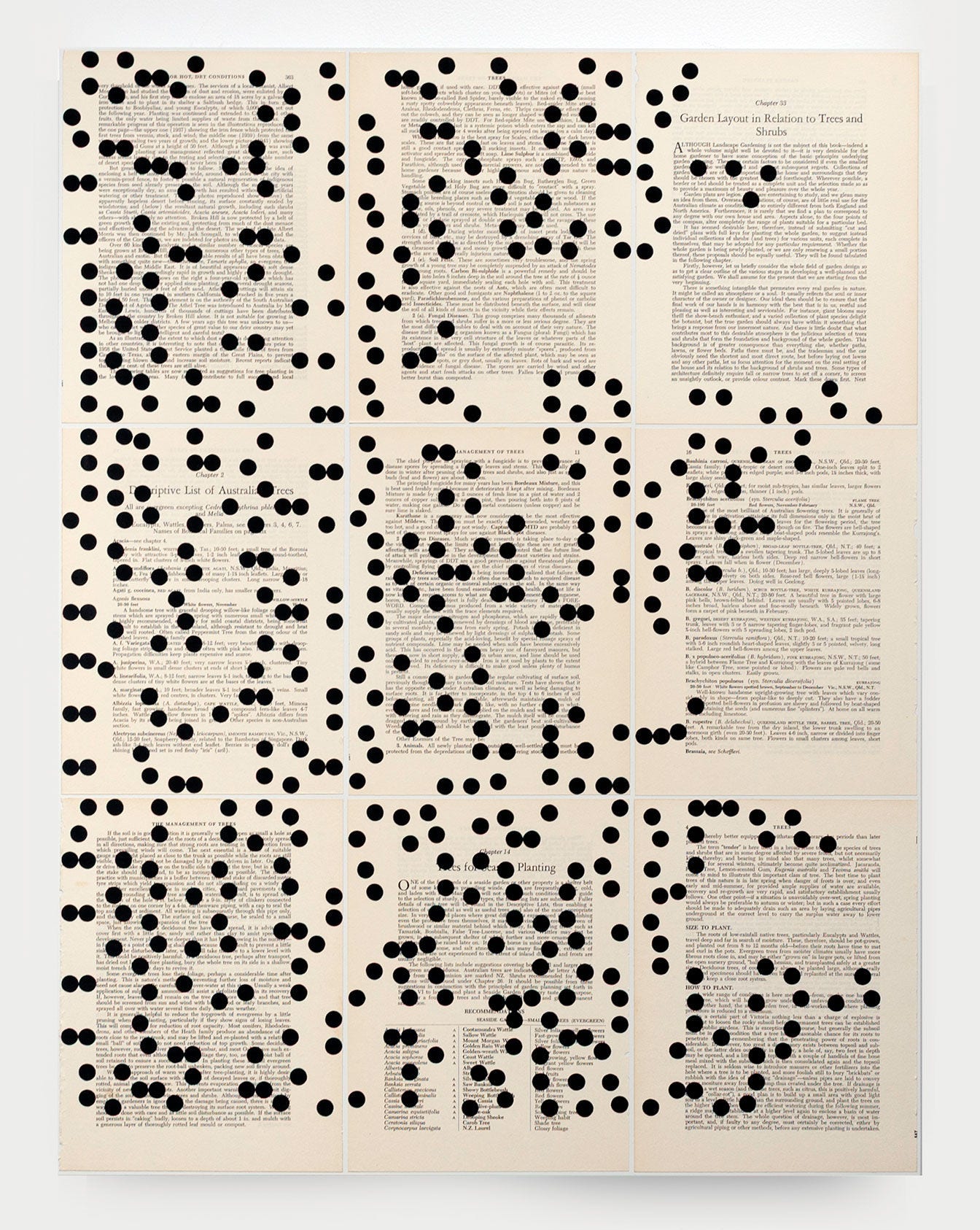


At the core of Sydney-based Mark Gowing’s practice are systems of visual abstraction that appropriate the negative spaces of the alphabet. By plotting forms through these voids, written texts are transformed into rhythmic structures that shift between language and geometric abstraction, inviting the viewer to navigate the unstable boundary between reading and seeing. The works are executed on found book pages from “Shrubs and Trees for Australian Gardens” by Ernest Lord and “The Flowering of the Pacific: Being an account of Joseph Banks’ travels in the South Seas and the story of his Florilegium” by Brian Adams. The artist’s abstracted writings for these works respond to the books’ subject matter.
- Instagram: @markgowing
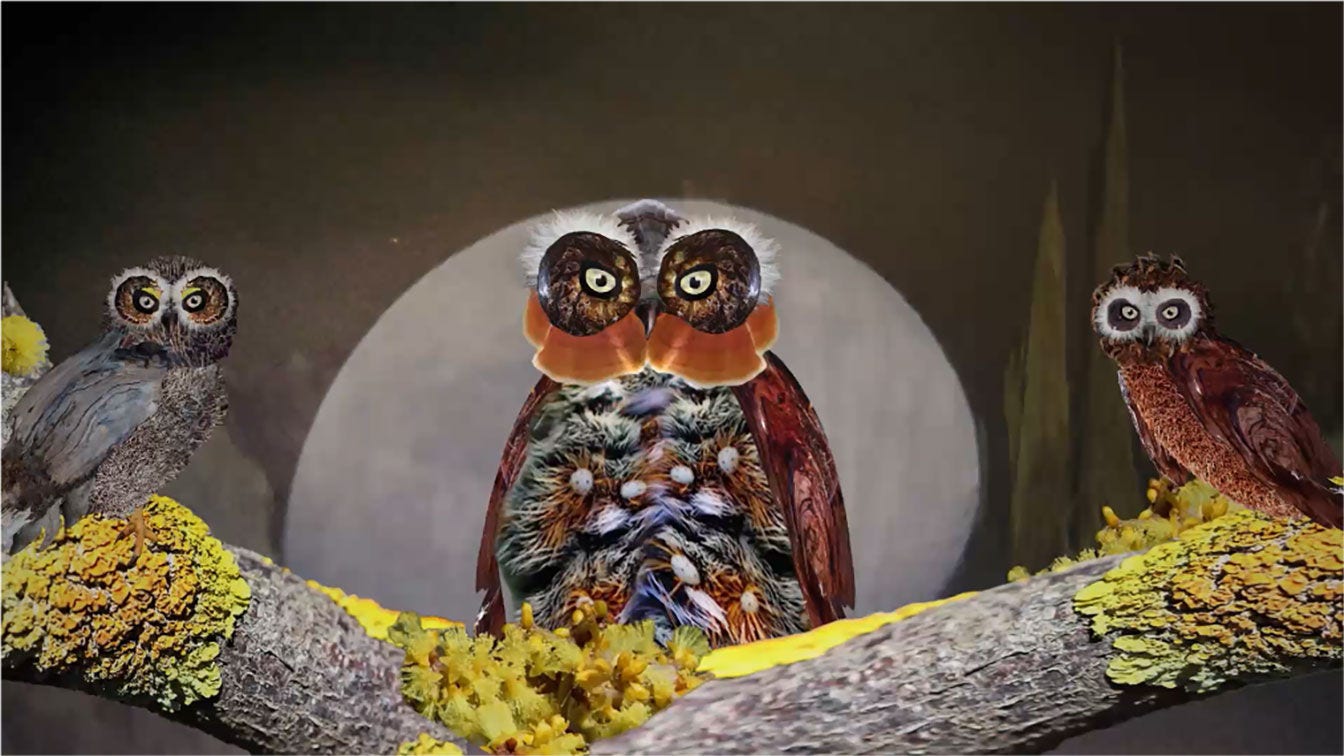
Victorian artist Chloe Holliday combines macro photography, animation, and moving image to explore relationships between wildlife and perception. This video depicts three owls constructed from ecological matter found within their own habitat, such as caterpillars, bark, seed pods, and fungi. Holliday documents these materials at a micro scale, recomposing them through digital layering and animation into larger composite organisms. Subtle movement such as blinking activates the work as a living ecological system. Owls are often associated with perception, hidden knowledge and the ability to see what is otherwise obscured. Here, that association is grounded materially, the owls created from the very environment they appear to observe.
- Instagram: @chloehollidaay
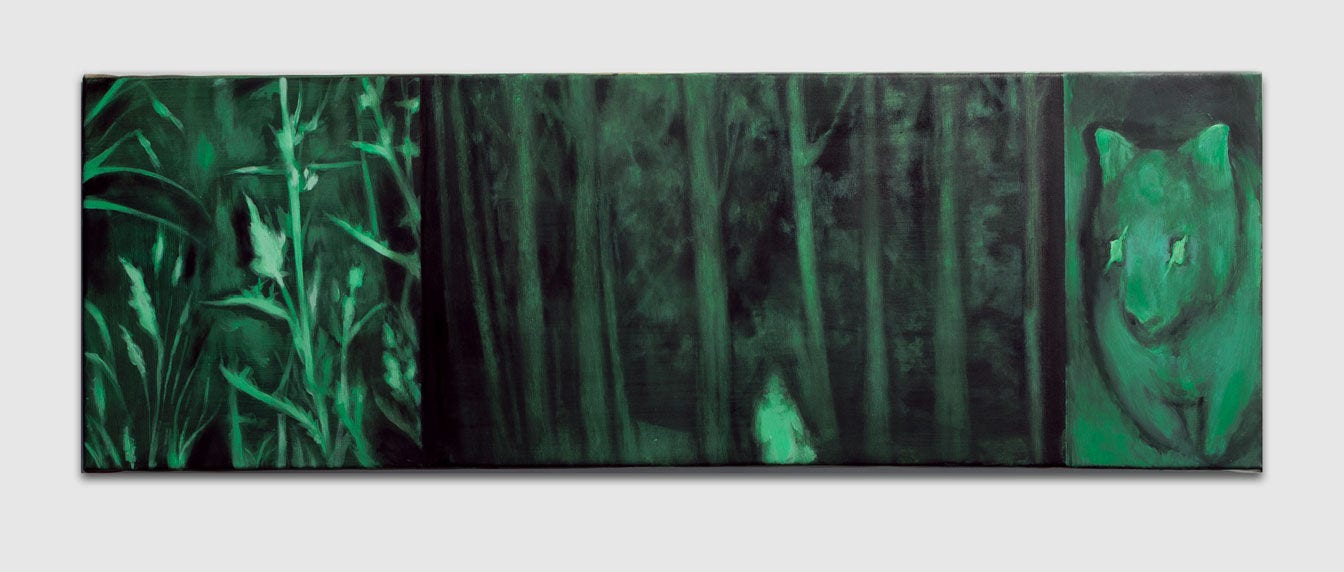
Using an infrared night vision camera, Stalker emerged from a recent artist residency undertaken by Gigi Malherbe in NSW’s Kangaroo Valley. Due to a permanent vision impairment that impacts her light perception and causes night blindness, the artist is captivated by the visual abstraction in her field of vision that occurs in low light. Initially deployed as a tool to see and check her surroundings during the residency, she realised the camera’s potential to capture the strange, abstract world of night. Sites previously unseen are illuminated, the eyes of animals hiding under the cover of darkness reflect back at the camera, and the trees seem both ghostly yet very much alive.
- Instagram: @gg_badgrass
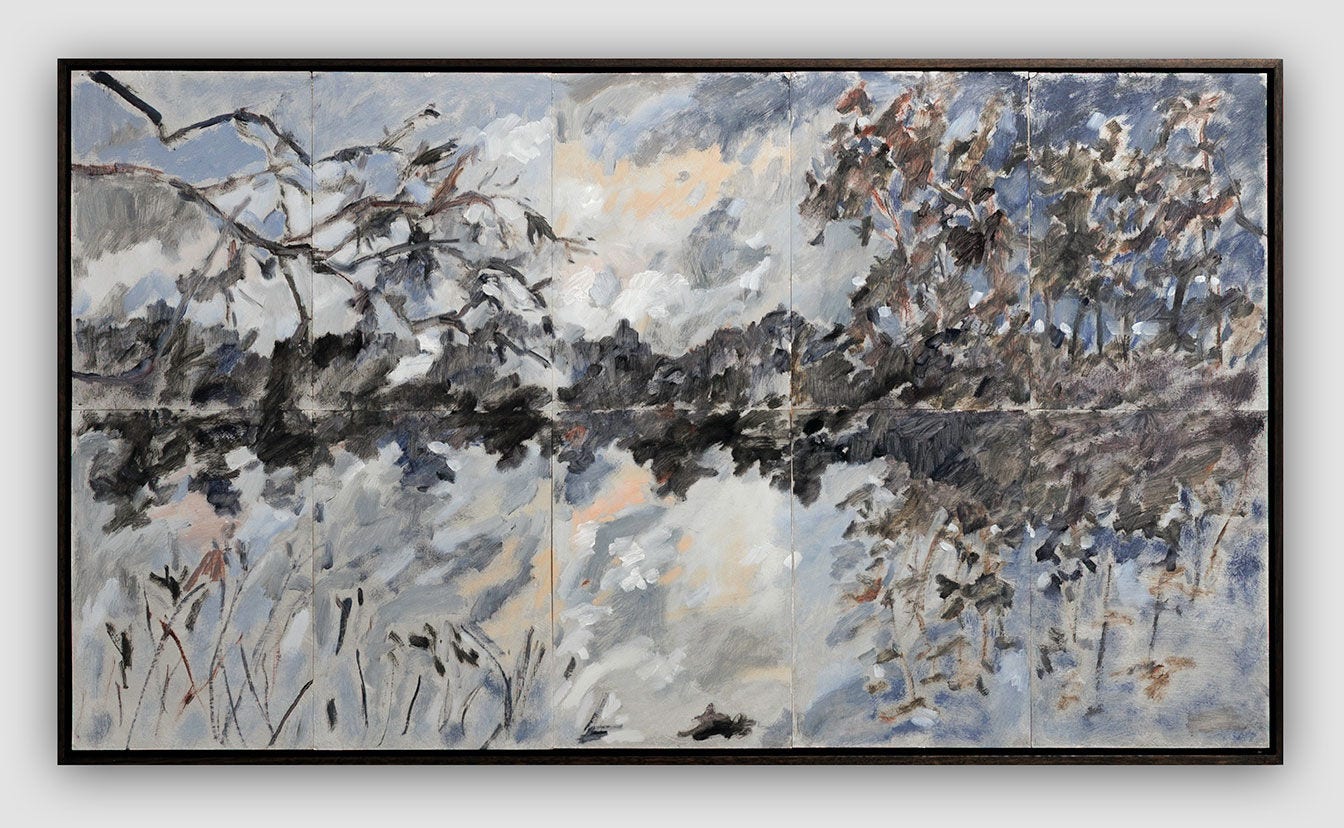

Holding echoes, 2026
oil on 20 aluminium sheets
80 x 150 cm
$A5,000 (SOLD)
These paintings by VCA’s Master of Contemporary Art graduate Kate McKenzie Lewis are composed of aluminium sheets and were developed during an artist residency at Shepparton Art Museum in regional Victoria. Responding to subtle seasonal shifts, the paintings reflect how reflections on land and water can distort perceptions of place. These quiet variations shape a psychological response to place: through gestural mark-making and dry brushing, the works mirror the instability of memory and the fluid nature of perception. Allowing fragments of the metal surface to shine through, the artist suggests that land is not fixed but felt, existing as both an external environment and shifting inner states.
- Instagram: @latekewis
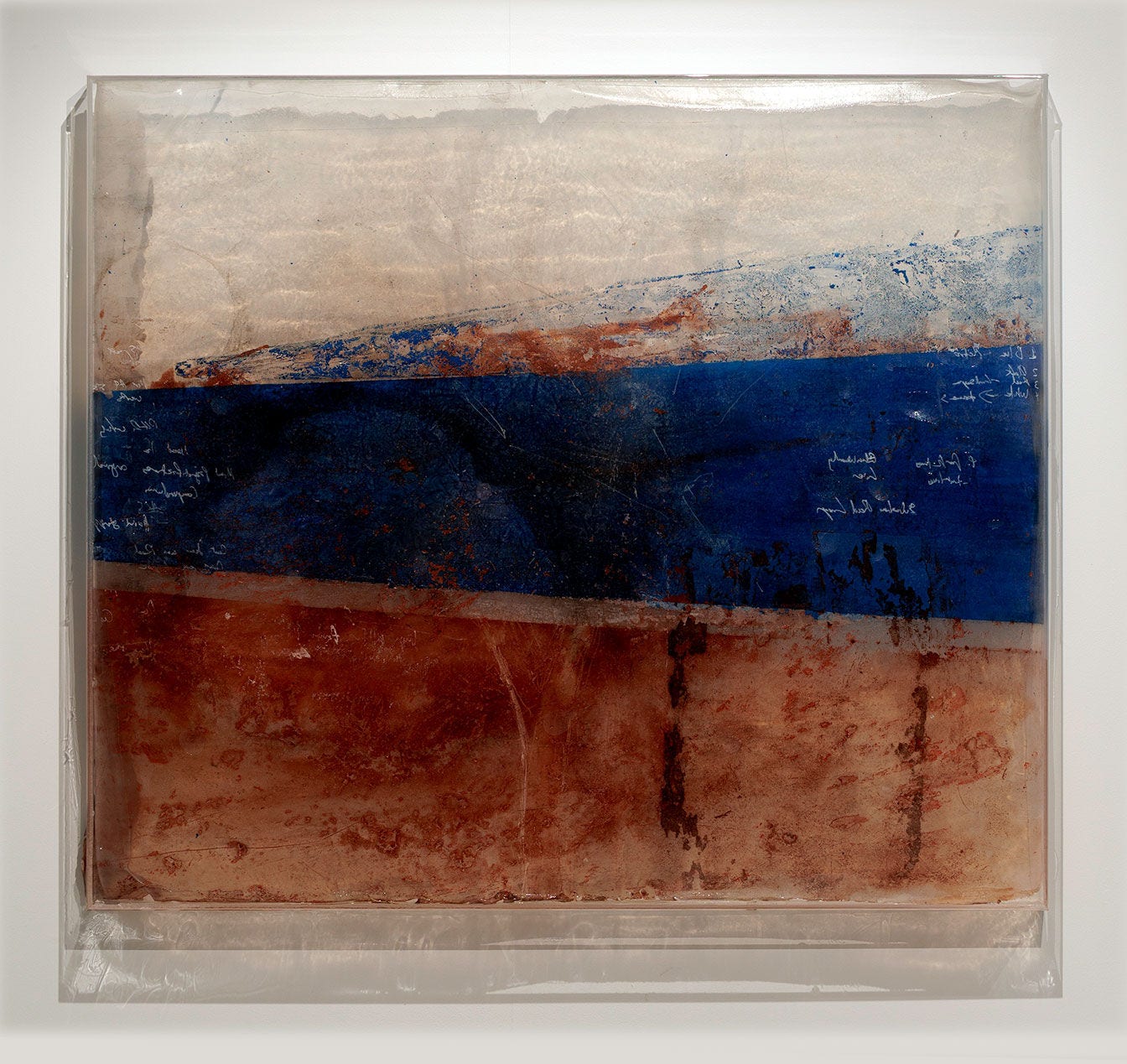

Look up and, 2025
PVA, ink and acrylic
50 x 70 cm
$A1,400 (SOLD)

Hazard, 2025
PVA, ink and acrylic
49 x 42 cm
$A1,100 (SOLD)
Daniel Song’s work engages with the construction and maintenance of city infrastructure. His paintings are extracted from surfaces into a skin-like sheet of PVA, enabling the artist to transpose the piece as well as traces of the process. Cities are responding to rapid population growth with incessant construction and expanding urban infrastructures. Song’s work examines the way older cityscapes adapt or are replaced. Taking scenes from everyday city upkeep and development, he reveals the irony of development infringing on or even ignoring existing infrastructure, thus creating temporal conflicts across the built environment.
- Instagram: @danielsong.art
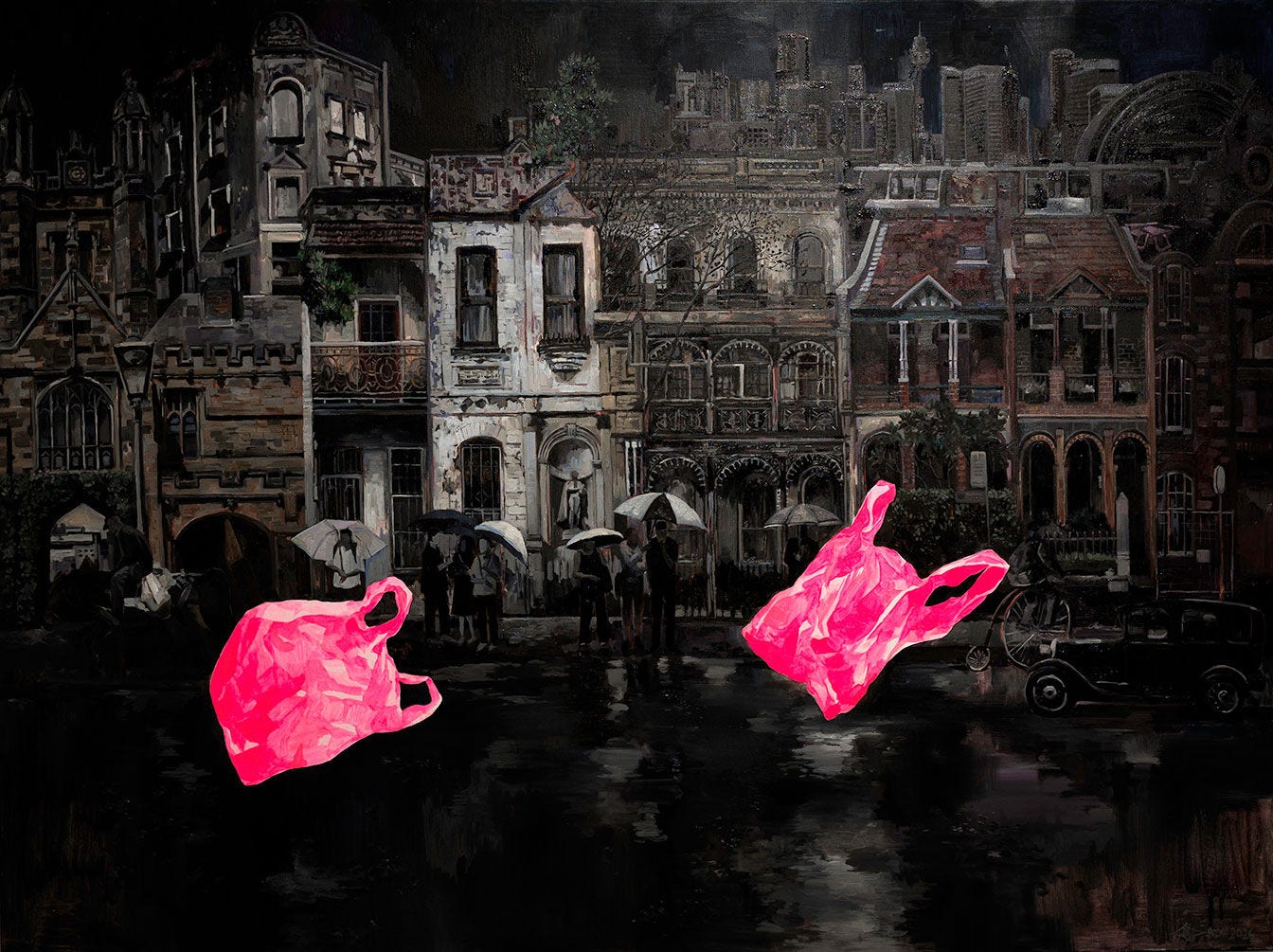
Two birds is a collaged painting based on different areas of urban Sydney and punctuated by a pair of pink plastic bags caught by the wind. The colour pink is sometimes associated with allurement, loveliness and purity, but can also be a tool of deception and irony in representations of things wrong or ugly. Sydney artist Alice Xu was inspired by the ‘Million Life’ gaming and entertainment stores that have popped up around Sydney, and by colourful, attention-seeking posts on social media. The surreal colour of the flying plastic bags interrupts the muted palette of the city, literally highlighting the impact of consumerism and artificiality on our urban landscapes.
- Instagram: @alicexuart