Infrastructure
Supporting UK regional connectivity
Creating a united airports group to enable more efficient regional air travel.
Swipe for more
| Sector | Infrastructure |
| Sub-sector | Transport |
| Location | United Kingdom |
Opportunity
The primary airports of Aberdeen, Glasgow and Southampton provide essential domestic and international connectivity to three important regional economic and population centres in the UK.
In 2014, Macquarie Asset Management partnered with Ferrovial to create AGS Airports – uniting the three airports under one group, with the aim of advancing their contribution to the UK’s regional development, enhancing the passenger experience, and delivering increased capacity.
Approach
Macquarie and Ferrovial collaborated with AGS Airports to develop its route network and identify initiatives that would set up each airport with vital improvements for sustained passenger growth.
In 2015, construction commenced on a landmark four-year project to transform facilities for passengers at Aberdeen International Airport – the airport’s largest investment in capacity since the current terminal opened in 1977.1
In 2019, significant investment was allocated to enhance access and improve the experience for users of Glasgow Airport.
Following the collapse of Flybe in 2020 and the subsequent impact of the COVID-19 pandemic on the aviation industry, Macquarie worked with AGS Airports to identify solutions that would secure Southampton Airport’s ongoing viability as a regional transport hub.
Outcome
With more than a decade of support, the partnership between Macquarie and Ferrovial enabled AGS Airports to invest £250 million into three important economic centres across the UK, helping to unlock the full potential of the portfolio:
- A £20 million investment saw the terminal space at Aberdeen International Airport increase by 50 per cent to accommodate enhanced security facilities, an increased retail offering, new areas for baggage reclaims, expanded business lounges, and new immigration and arrivals facilities.1
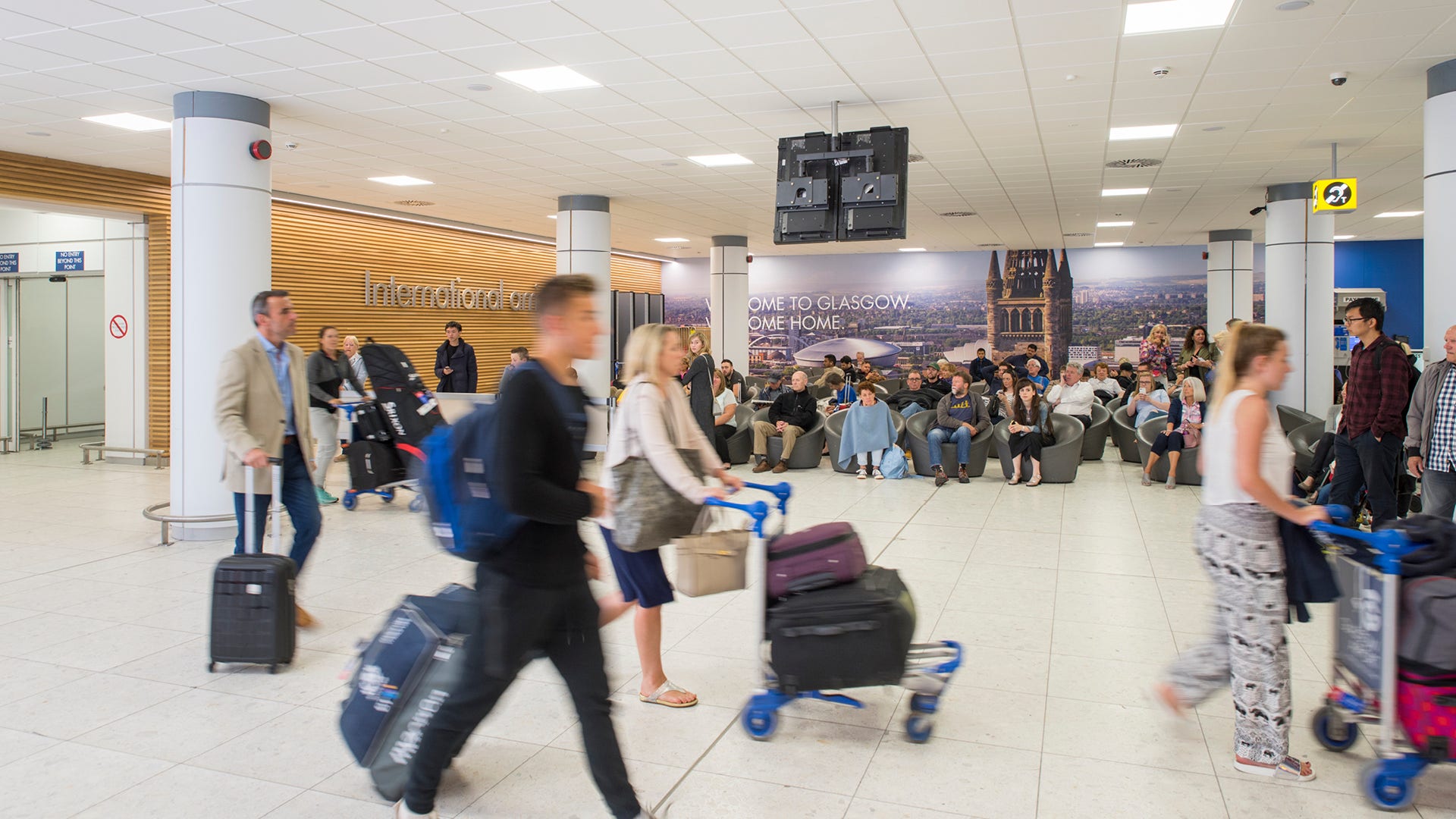
- A £9 million investment revamped Glasgow Airport’s infrastructure to accommodate all wide-body aircraft. Further improvements included a dedicated pick-up and drop-off facility, new car rental centre, and expansion of the security facilities by 20 per cent, while further diversifying retail and lounge options for passengers.2
- Following a £17 million investment, Southampton Airport opened a runway extension in 2024. The extension enables the airport to accommodate larger aircraft and diversify its route network, for the benefit of communities and businesses across the South East.
During the COVID-19 pandemic, when UK air arrivals fell by 89 per cent between April 2020 to January 2024, Macquarie and Ferrovial provided vital support to ensure the ongoing resilience of the airports group, despite the unprecedented challenges posed to its day-to-day operations.3
The airports now serve more than 10.8 million passengers annually,4 contributing approximately £2 billion in Gross Value Added to the UK economy per year, and support more than 30,000 jobs across a sophisticated supply chain.5
In January 2025, a Macquarie-managed fund Asset Management (Macquarie) and Ferrovial sold AGS Airports.6

Serving more than 10.8 million passengers annually

Supporting more than 30,000 jobs

Contributing ~£2 billion in Gross Value Added to the UK economy

AGS Airports connects communities in Scotland and South East England to the world. Its airports underpin the UK’s regional development, and we’re committed to providing them with the resources they need to grow and adapt to the future of aviation.”
Martin Bradley
Head of Infrastructure EMEA
Macquarie Asset Management
- Terminal transformation, Aberdeen International Airport
- Airport invests £1.4m to increase central security area capacity by 20%, Glasgow Airport
- GOV UK statistics relating to passenger arrivals in the United Kingdom since the Covid-19 outbreak
- LTM June 2024 passenger numbers across Aberdeen, Glasgow and Southampton Airport, AGS Airports
- Glasgow Airport contributes £1.44 billion to Scottish Economy and supports over 30,000 jobs
- A wholly owned subsidiary of Public Sector Pension Investment Board (PSP Investments)