
Insights
Beyond the grid: How active ownership is key to energy-transition investing
October 16, 2026
~ 6 min read
Electrification may be the dominant driver of future power demand. For Elise Vaudour of Macquarie Asset Management, that creates a multi-decade opportunity for investors backed by active ownership and operational expertise
The following article features Elise Vaudour, Head of Wealth for Green Investments, and was produced in partnership with Citywire.
Infrastructure has historically been known for its defensive qualities. Predictable cashflows, inflation linkage and resilience through economic cycles have made it a staple allocation for investors seeking stability. Yet infrastructure is not typically associated with growth.
That perception, argues Elise Vaudour, Head of Wealth, Green Investments at Macquarie Asset Management, no longer reflects the opportunities that are being generated by the energy transition.
Structural forces such as electrification and digitalisation are transforming global energy systems.
‘AI and data centres receive most of the attention,’ she said. ‘But they are not the primary driver of future electricity demand.’
Global power demand could rise by around 75% by 2050, according to BloombergNEF’s 2025 New Energy Outlook. While digital infrastructure contributes to that growth, Vaudour sees the broader electrification of the economy as the more powerful long-term trend. The increasing adoption of electric vehicles, industrial electrification and the replacement of fossil-fuel-based systems with electricity are expected to reshape energy demand for decades to come.
The result is a substantial investment gap. Even though the International Energy Agency expects global energy investment to reach around $3.3tn this year, strong demand drivers such as energy security and affordability already mean there is a considerable gap between supply and demand, according to Vaudour. Looking forward, the gap is predicted to widen much further: many energy-transition scenarios suggest annual spending will ultimately need to rise to roughly $5tn or more to meet long-term decarbonisation and electrification goals. For infrastructure investors, that imbalance creates an investment opportunity.

Elise Vaudour
Head of Wealth, Green Investments, Macquarie Asset Management

‘We invest on the supply side of the energy spectrum,’ Vaudour said. ‘We invest in businesses that produce and supply energy, which means they benefit directly from these long-term demand trends.’
Macquarie’s approach differs from investors focused solely on mature operating assets. Rather than acting as a passive owner, the firm typically seeks controlling or influential stakes and positions itself as an active manager capable of creating value through operational expertise.
That capability, Vaudour argues, rests on scale and specialisation. The firm maintains dedicated value-creation teams, technical engineers and local energy-market experts across the regions in which it invests.
‘Energy is fundamentally local,’ she said. ‘Even within the United States there are multiple distinct power markets. Understanding those nuances is critical.’
That expertise becomes particularly valuable because Macquarie invests across the full infrastructure lifecycle, from development and construction through to long-term operation. Each phase presents a different risk-return profile.

Operational assets exhibit the characteristics most investors associate with infrastructure: contracted revenues, inflation protection and predictable cashflows. Development and construction assets, by contrast, carry greater risk but also offer the potential for higher returns.
This is because building infrastructure creates value that would otherwise be captured by third-party developers. When assets move from development into operation, they become productive hard assets on a company’s balance sheet.
‘Successfully developing and constructing infrastructure can create significant value by transforming projects into operating assets capable of generating long-term cashflows,’ Vaudour said. ‘Otherwise, that company would have had to acquire it from other developers at a premium.’
Active ownership is central to that process. Rather than simply providing capital, Macquarie works alongside management teams to help shape strategy, optimise operations and identify opportunities to enhance long-term value. The firm's objective is to support businesses through key stages of growth and development while maintaining a focus on risk management and operational performance.
The challenge, of course, is execution, and this is where specialist expertise and active ownership can make a meaningful difference.
Infrastructure investors frequently encounter regulatory hurdles, evolving technologies, construction risk and fragmented local markets. For many investors, these factors are deterrents. For Vaudour, however, they highlight the importance of experience, technical expertise and local market knowledge.
'This is where experience, technical expertise and local market knowledge become particularly valuable,' she said.
The objective is to guide businesses through a series of what she describes as ‘de-risking milestones’. As projects mature, uncertainty declines, cashflows become more predictable and assets begin to resemble core infrastructure investments attractive to a broader universe of investors.
Scale amplifies that process. Globally, Macquarie’s energy-transition portfolio encompasses more than 140GW of development, construction and operating assets across North America, western Europe and developed Asia-Pacific markets, as at March 2026.
That scale provides advantages in procurement, financing and commercial negotiations. It also strengthens the firm’s position when securing long-term power purchase agreements (PPAs) with large corporate customers.

These contracts sit at the heart of Macquarie’s investment philosophy.
For Vaudour, infrastructure investing is fundamentally about downside protection. While investors may occasionally sacrifice some upside potential, they gain visibility over future revenues and resilience against market volatility.
‘Infrastructure investors want predictability,’ she said. ‘They want long-term contracts and stable cashflows.’
The objective, Vaudour argues, is to combine income generation, capital preservation and the potential for capital appreciation within a relatively low-volatility framework.
Importantly, Vaudour stresses that the firm’s focus is on delivering value through optimising the business rather than simply employing leverage.
She points to examples within the firm’s portfolio where substantial value has been created with little or no leverage through operational optimisation, enhanced commercial arrangements and improved asset performance. ‘This comes back to things like using our negotiating power with suppliers, managing to decrease costs for the business or entering into a long-term Power Purchase Agreement,’ she said.
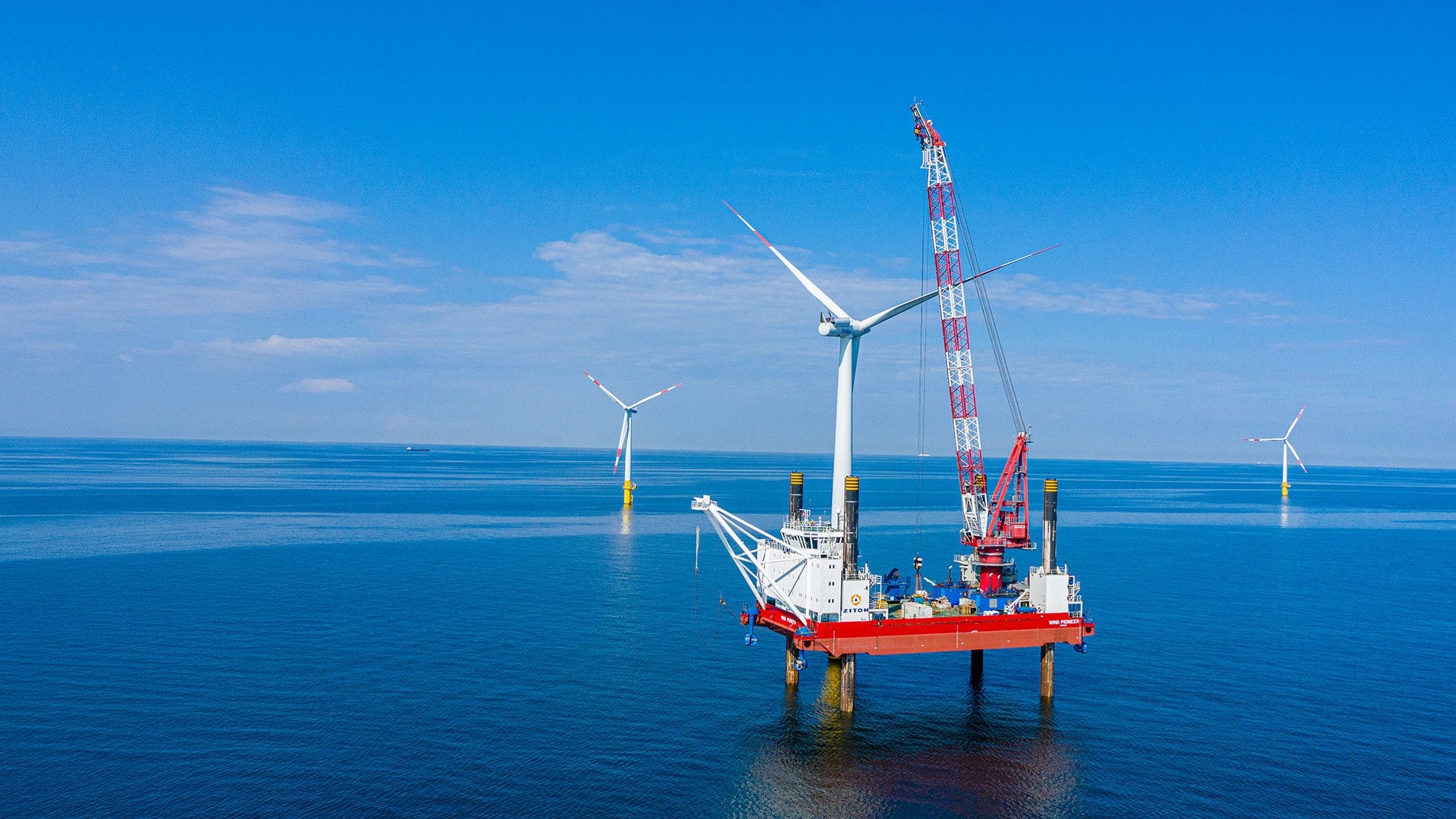
She points to a recent offshore wind investment, where value creation has been driven by production efficiencies, commercial contracts and operational expertise, with zero leverage employed.
Underlying this philosophy is an emphasis on active ownership. During the first two years following an acquisition, Macquarie typically focuses on strategic alignment, management quality and incentives, working closely with management teams to establish a shared business plan and create a foundation for long-term value creation.
The firm works closely with management teams to establish a shared business plan while also paying close attention to operational risks such as health and safety, cybersecurity and technology resilience.
Ultimately, the clearest measure of value creation is not an internal valuation model but investor results. Macquarie assesses progress through both cash distributions generated during ownership and realised outcomes when assets are sold.
More than half of the firm’s infrastructure track record has already been realised, providing an external validation of its investment approach, she said.
For Vaudour, the best way to invest in the energy transition is to take a broad-based approach that benefits from powerful drivers such as energy security and affordability. As electrification reshapes the global economy, she believes active ownership, operational expertise and disciplined execution will remain critical to converting that demand into long-term infrastructure value.

Infrastructure insights
Discover how we are leveraging global trends to unlock new opportunities in alternatives investing – from rapid digitalisation and changing demographics to decarbonisation and sustainable development. Stay informed with the latest research, macroeconomic commentary and sector insights from our experts.
Contact us
Connect with our wealth team
Access high quality private markets investments through our leading global platform.
For investment professionals only.
Macquarie Asset Management is a leading global asset manager offering a diverse range of investment solutions, including real assets, real estate, and credit.
This information is a general description of Macquarie Asset Management only. The views expressed in this website represent those of the relevant investment team and are subject to change. No information set out above constitutes advice, an advertisement, an invitation, a confirmation, an offer or a solicitation, to buy or sell any security or other financial product or to engage in any investment activity, or an offer of any banking or financial service. Some products and/or services mentioned on this website may not be suitable for you and may not be available in all jurisdictions.
Investing involves risk including the possible loss of principal. The investment capabilities described in this website involve risks due, among other things, to the nature of the underlying investments. All examples herein are for illustrative purposes only and there can be no assurance that any particular investment objective will be realized or any investment strategy seeking to achieve such objective will be successful. Past performance is not a reliable indication of future performance.
Before acting on any information, you should consider the appropriateness of it having regard to your particular objectives, financial situation and needs and seek advice.
Other than Macquarie Bank Limited ABN 46 008 583 542 (“Macquarie Bank”), any Macquarie Group entity noted in this website is not an authorized deposit-taking institution for the purposes of the Banking Act 1959 (Commonwealth of Australia). The obligations of these other Macquarie Group entities do not represent deposits or other liabilities of Macquarie Bank. Macquarie Bank does not guarantee or otherwise provide assurance in respect of the obligations of these other Macquarie Group entities. In addition, if this website relates to an investment, (a) the investor is subject to investment risk including possible delays in repayment and loss of income and principal invested and (b) none of Macquarie Bank or any other Macquarie Group entity guarantees any particular rate of return on or the performance of the investment, nor do they guarantee repayment of capital in respect of the investment.
Additional important information (including regional disclosures)
[3246420]