

Perspectives
Infrastructure debt: First among equals
July 1, 2024
By: Ben Taylor, Rav Sangha, Daniel McCormack
Executive summary
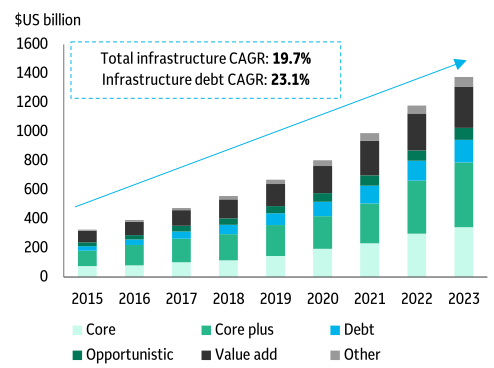
- Infrastructure is one of the most rapidly growing asset classes globally, with assets under management increasing by 19.7% per year since 2015. Within infrastructure, it is infrastructure debt that has seen the most rapid expansion, boasting lower default rates and higher recovery rates compared with similar non-financial corporate debt.
- This surge, which has been fuelled by (1) the global need to invest in essential services and large-scale investments, and (2) investors seeking diversification and enhanced risk-adjusted returns, has resulted in substantial growth opportunities for alternative lenders.
- Infrastructure assets provide essential services with low demand elasticity, high capital intensity, and significant barriers to entry. These types of assets tend to offer stable, predictable, and inflation-linked cash flows, ensuring reliable returns and reduced risk compared with non-financial corporates. However, like all commercial enterprises, they can face operational challenges and financial risks, such as cost overruns and delays.
- The withdrawal of traditional banks from infrastructure financing has created significant opportunities for non-bank lenders. These agile lenders can quickly provide bespoke, complex financing solutions, meeting a crucial market need. The long-term nature of these investments heightens the importance of rigorous due diligence and ongoing risk management to mitigate potential financial and operational risks.
Infrastructure debt and its characteristics
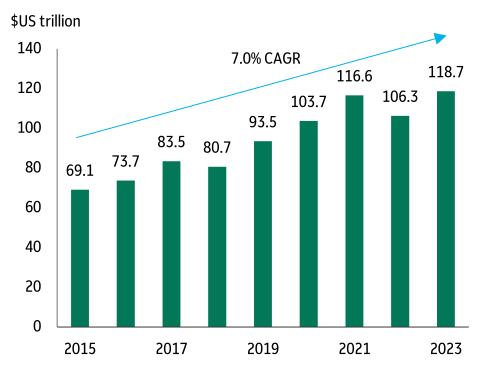
Infrastructure is one of the most rapidly growing asset classes around – since 2015 assets under management (AUM) have grown at a compound annual growth rate (CAGR) of 19.7% (Figure 2), almost three times the pace of growth in overall global AUM (Figure 1). Within infrastructure, the most rapidly growing major subcomponent has been infrastructure debt, which has expanded at a remarkable CAGR of 23.1% over the same period.
Figure 1:
Global AUM growth
Figure 2:
Infrastructure AUM growth
Sources: Boston Consulting Group (June 2024), Preqin (June 2024).
What has made infrastructure debt so popular with investors? How does it differ from private credit lending in general? What returns does it offer and what role does it play in a portfolio? In this paper, we aim to answer these questions and more.
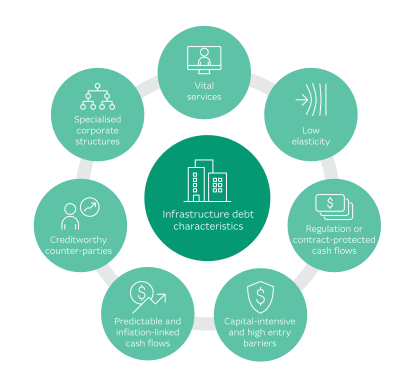
Infrastructure assets and infrastructure debt have a number of key traits that define them and differentiate them from other assets.
1. Essential services. Infrastructure projects deliver services fundamental to daily life. This includes ensuring access to clean water, reliable electricity, and efficient transportation systems, all of which are crucial for public health, safety, and economic productivity. Financing a municipal waste management facility, for example, not only promotes public health and hygiene but also offers an indispensable service to the community, ensuring a steady demand. Similarly, the construction of major bridges or tunnels provides essential utilities that the community relies on, making these projects irreplaceable and ensuring a reliable return on investment. This inherent stability makes infrastructure projects particularly attractive for lenders.
2. Demand elasticity. The demand for essential services is generally inelastic, meaning it does not vary significantly with changes in price or income. This stability is crucial for ensuring predictable revenue streams. For example, electricity demand stays broadly constant despite fluctuating tariffs because both individuals and businesses require a continuous supply for their daily activities. This consistent demand translates into stable cash flows, which is attractive to lenders.
3. Highly regulated assets and long-term contractual cash flows. Many infrastructure projects benefit from regulatory frameworks or long-term contracts, such as concession agreements, which lock in cash flows and shield them from market volatility. For example, a wind farm with a long-term power purchase agreement (PPA) can lock in a fixed revenue stream regardless of market price fluctuations.
4. Capital intensive with high barriers to entry. The substantial initial capital required for infrastructure projects acts as a material barrier to new entrants, thereby limiting competition and protecting the revenue streams of established projects. The construction of a large-scale hydroelectric dam, for instance, is not only capital intensive but also demands sophisticated technology and extensive regulatory approvals. This reduces the risk of new competitors entering the market, ensuring that established projects maintain their revenue streams and thereby provide lenders with greater financial security and predictability.
5. Stable, predictable, and inflation-linked cash flows. Infrastructure projects are viewed as desirable assets to lend to because their cash flows can be accurately forecasted, enhancing their creditworthiness. Additionally, linking revenues – and sometimes costs – to inflation ensures that cash flows retain their real value over time. For instance, toll rates on highways often adjust for inflation, preserving the purchasing power of the revenue generated. This inflation link provides a consistent real return on infrastructure assets and offers investors (debt and equity alike) protection against periods of high inflation.
6. Creditworthy counterparties drive reliable partnerships. Infrastructure projects frequently involve partnerships with government entities or reputable commercial firms, which lowers the risk of default. These partners, often having robust credit ratings, offer financial stability and a vested interest in the project’s long-term success. A public transport system financed and operated by a municipal government, for instance, presents a lower risk profile due to the government’s commitment to public service continuity.
7. Specialised corporate structures or enhanced management. Infrastructure financing often employs special purpose vehicles (SPVs) or single-purpose companies to manage specific projects, enhancing their attractiveness for lenders. This setup isolates financial risks, aligning revenues and expenses to a particular purpose, which enhances transparency and simplifies management. For example, an SPV dedicated to an airport terminal project will have clearly defined cash flows and responsibilities, streamlining both management and financial oversight. This clarity and focus reduce complexity and risk for lenders, providing a more secure and predictable investment opportunity.
Figure 3: Infrastructure debt’s characteristics
Sources: CBRE Research, CBRE Data Centre Solutions, 2H23.
Infrastructure debt funds can also strategically focus on sectors, assets, and regions that allow for the minimisation of risks and maximisation of stable returns. Funds can prioritise investments in areas known for their political and economic stability, while also focusing on experienced sponsors and sectors that traditionally offer reliable revenue streams. This careful selection and management approach enables funds to not only mitigate potential financial challenges but also leverage opportunities within the infrastructure sector, aligning their investments with broader economic and societal gains.
- Politically stable and economically predictable regions. Mature markets, such as North America, Europe, and the UK, are characterised by established legal systems, sophisticated financial markets, and transparent regulatory bodies, all of which contribute to a lower-risk environment for investment. For example, an investment in a Scottish wind farm benefits from the UK’s clear regulatory policies on renewable energy and government incentives for green projects, offering a safeguard against financial uncertainties like non-payment. The regulatory framework may also provide strong inflation protection by linking regulated asset base and revenue allowances to inflation.
- Leveraging equity partner expertise. Partnering with experienced infrastructure equity sponsors who possess deep industry knowledge and resources is crucial. These sponsors bring expertise in managing complex projects and the financial robustness to support long-term developments or sustain assets during challenging times. Their involvement provides an additional layer of security for debt investors, as these sponsors are often committed to achieving project success to protect their equity investment.
The market opportunity and key thematics
The landscape of infrastructure financing is changing rapidly, with infrastructure debt accounting for around one-quarter of all infrastructure funds raised so far in 2024.1 As mentioned earlier and shown in Figure 2, infrastructure debt has been the fastest-growing segment of the asset class, with AUM expanding at a 23.1% CAGR since 2015. This growth has been driven by the desire for yield and stable long-term returns, which align well with the liabilities and investment horizons of institutional investors like pension funds and insurance companies. Today’s uncertain economic climate and the volatility that comes with it may also enhance the portfolio appeal of infrastructure debt given its defensive nature and the underlying assets’ ability to deliver consistent returns even in the face of macroeconomic headwinds.
Market opportunity amid banking retreat
While infrastructure equity is a well-established asset class, infrastructure debt is a newer phenomenon but is quickly becoming an important part of institutional portfolios. Government policies like the US Infrastructure Investment and Jobs Act (IIJA) not only boost infrastructure project pipelines but also enhance investment attractiveness through supports and guarantees.
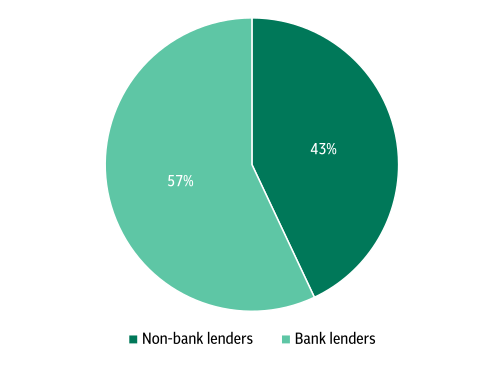
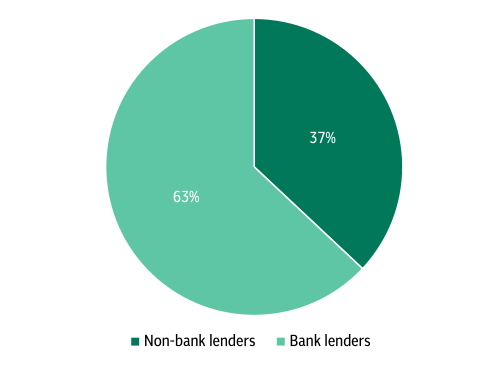
The exit of banks from long-term infrastructure financing due to regulatory pressures and balance sheet constraints has opened up a significant market for alternative lenders. As the definition of infrastructure expands to include renewable energy, digital infrastructure, and transition technologies, the opportunities for alternative lenders have expanded even further. This rapid growth of the perimeter for infrastructure debt financing combined with the banks’ exiting has created an optimal environment for alternative lenders to fill the void. As Figures 4 and 5 show, although banks play a larger role in financing in the EU than they do in the US, the proportion of the total financing market available to non-bank lenders is large in both geographies.
Figure 4:
Infrastructure financing – US composition January-June 2024
Figure 5:
Infrastructure financing – EU composition January-June 2024
Source: IJGlobal (June 2024).
Current trends and return profiles
From an asset class perspective, infrastructure equity has the potential to offer higher returns (relative to infrastructure debt) but comes with greater volatility and risk. As the global economic landscape grows more complex and uncertain,2 the appeal of infrastructure debt in institutional portfolios is likely to grow. Its capacity to offer stable, risk-adjusted returns, backed by real assets, makes it an increasingly appealing component from a portfolio perspective.
The growing complexity and scope of infrastructure investments reflect changes in the underlying economies these assets are a part of, as well as the evolving priorities and innovations in both the public and private sectors. The growth in digital infrastructure assets (global digital infrastructure equity deal volume has increased more than tenfold in the last decade) and the expansion in the opportunity set in the energy transition space are two cases in point. The widening of the infrastructure debt investment opportunity set has come from other areas also.
- Government policies catalyse infrastructure development. Government initiatives and legislation, such as the IIJA in the US, have been pivotal in expanding infrastructure investment. By allocating substantial funds to rejuvenate ageing infrastructure and modernise utilities like electric grids and water systems, these policies not only address urgent public needs but also help secure long-term debt financing opportunities for projects with predictable, stable cash flows.
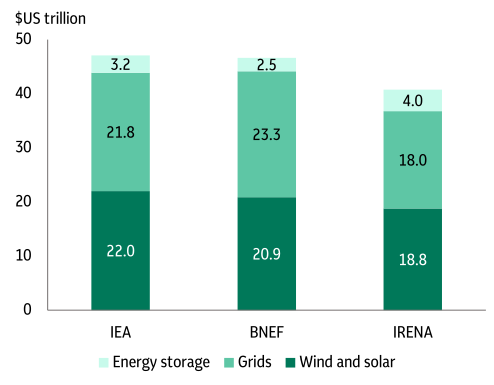
- Decarbonisation – Driving the transition to a low-carbon economy. The push towards decarbonisation has opened up a wealth of opportunities in infrastructure debt, particularly through projects aimed at transitioning to renewable energy sources such as wind, solar, and hydroelectric power. Policy support and technological innovation are also turbocharging the opportunity set in what we call the second phase of the energy transition, which includes things such as battery and energy storage solutions, carbon capture, and green hydrogen development. Enhanced by government incentives and subsidies, these projects are now more financially viable, attracting considerable interest from specialised debt investors and aligning with broader objectives to reduce carbon-emission footprints. The scale of the opportunity in this area is huge. Figure 6 below shows estimates from three major forecasters of the amount of capital expenditures (capex) that will be needed (out to 2050) in energy storage, grids, and wind and solar to transition the power generation sector to net zero. To put these numbers in perspective, the average of the three estimates is $US44.8 trillion, which is 37.8% of all the AUM of asset managers globally.3
Figure 6:
Capex needs of the energy transition
Figure 7:
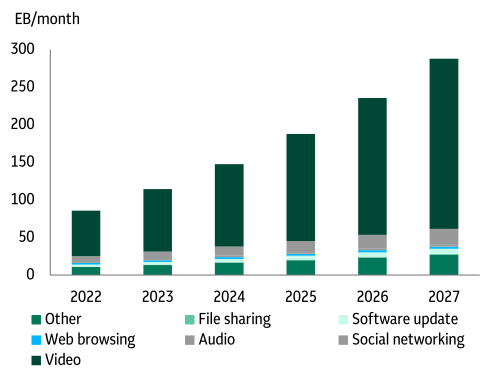
Demand for data driven by video in the near term
Sources: International Energy Agency (IEA), Bloomberg New Energy Finance (BNEF), International Renewable Energy Agency (IRENA), Ericsson (2023).
- Digitalisation – Investment in a growth sector. The digital transformation of economies worldwide has necessitated substantial investments in critical infrastructure, notably data centres and fibre-optic networks. The expansion of cloud-based computing, increased internet penetration, and the rollout of 5G technology have driven demand for robust, reliable, and low-latency digital infrastructure. Looking ahead, growth in demand for data is likely to be very rapid. In the near term, as Figure 7 shows, the main driver is the very strong demand for video content. But further ahead, there are several new technologies on the horizon that could turbocharge data demand – these include artificial intelligence, driverless cars, the internet of things (IoT), and robotics, just to name a few. The growth in data demand creates a substantial opportunity set for infrastructure debt funds, which have increasingly targeted data centres, due to their essential role in supporting high-tech economies while providing long-term, stable returns to investors.
- Demographics – Adapting to urbanisation and ageing demographics. Demographic shifts, including urbanisation and ageing populations, have underscored the need for substantial investments in urban infrastructure, healthcare facilities, and retirement homes. Projects like urban transit systems to accommodate growing urban populations or the expansion of healthcare facilities in regions with ageing demographics are typically financed through infrastructure debt.
- Emerging technologies and innovation. As nascent technologies mature, they become viable candidates for infrastructure debt financing. A prime example is the development of green steel, which involves producing steel using renewable energy sources or less-carbon-intensive processes. Initially, the high costs and technological uncertainties associated with green steel made it a risky investment. However, as the technology has advanced and gained economic viability, supported by government policies aimed at reducing industrial carbon emissions, green steel projects have started to attract infrastructure debt financing. These projects benefit from long-term contracts and government subsidies, reducing the risk profile and making them attractive to debt investors.
Infrastructure debt’s relative performance traits
Investment traits (discussed in the first section of this paper) suggest that infrastructure debt, as an asset class, should have certain performance characteristics. The defensiveness of the underlying assets should mean that returns are relatively stable and the risk of default low, something that should result in better performance (relative to other pockets of credit) in times of macroeconomic stress. The “asset heavy” nature of the asset class should also imply relatively high recovery rates in the event of default. In this section of the paper, we examine whether, as a matter of empirical reality, infrastructure debt has indeed performed in these ways. We also examine its long-run performance and compare it with other, similar, asset classes.
Default rates – Lower than for corporate debt
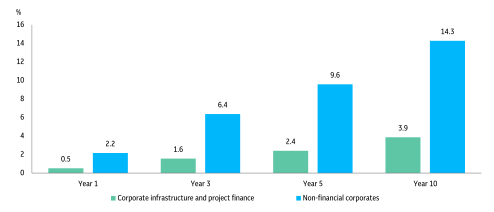
Figure 8 shows cumulative default rates over time for infrastructure debt and compares them with default rates for the broad universe of non-financial corporates (NFCs). Over each major time horizon, the default rate on debt issued by NFCs is higher than that on infrastructure assets. Indeed, NFCs default around four times as often as corporate infrastructure companies and project finance companies.
Figure 8: Cumulative default rates – 1983-2022
Source: Moody’s Investors Service (2023) accessed June 2024.
Recovery rates, expected loss and returns
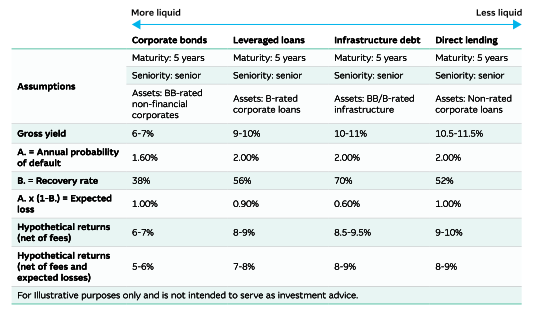
Thanks to its defensive nature, infrastructure debt tends to maintain a higher average credit rating than the broader corporate debt universe. However, even when controlling for credit rating, infrastructure debt has persistently demonstrated lower default rates and higher recovery rates than general corporate credit. For instance, the recovery rate for senior secured infrastructure debt averages 70%, compared with just 52% for direct lending and 38% for corporate debt (Figure 9).
Figure 9: Recovery rates, expected loss and returns by credit bucket
Sources: Default and recovery rates are taken from Cliffwater Report on U.S. Direct Lending (4Q2023) and Moody’s Infrastructure default and recovery rates (2023). Return estimates are based on internal analysis for infrastructure debt and direct lending. The return estimates for corporate bonds and leveraged loans are based on the Bloomberg US Corporate High Yield Bond Index and Morningstar LSTA US Leveraged Loan Index. Fees have been obtained from internal analysis across infrastructure debt and direct lending funds. For corporate bonds and leveraged loans, fees have been obtained from appropriate exchange-traded fund (ETF) indices. All data as at 31 December 2023 unless stated otherwise. For illustrative purposes only.
Expected loss varies by strategy and should be considered when comparing risk-adjusted returns across different credit strategies. However, infrastructure debt has historically offered lower expected loss than corporate credit with similar credit quality and maturity. Indeed, the historical expected loss rate on infrastructure debt has been 0.3% per annum, compared with around 1% for the other main forms of lending.
To estimate and compare hypothetical risk-adjusted returns, investors should subtract the annual expected loss from the projected net return. Table 1 provides hypothetical net risk-adjusted returns for various credit strategies. While factors like strategic asset allocation, return volatility, and the managers’ track record also influence investment decisions, this analysis emphasises the importance of looking beyond headline target returns when comparing strategies.
Realised returns – Public markets indices
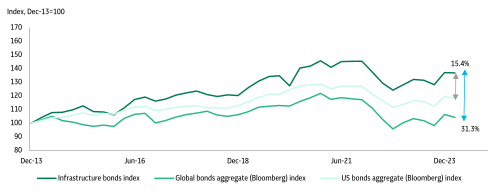
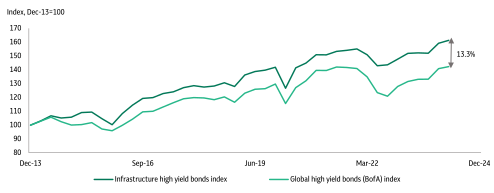
Infrastructure debt should be able to deliver strong, consistent returns over time. Using some listed markets benchmarks in Figures 10 and 11, we compare the performance of both a general infrastructure debt benchmark and a high yield infrastructure debt benchmark with a comparable peer.
Figure 10: Infrastructure debt versus corporate debt
Source: Bloomberg Finance LP (June 2024).
Figure 11: Infrastructure high yield debt versus corporate high yield debt
Source: Bloomberg Finance LP (June 2024).
Both charts reveal a compelling trend: over the past decade, infrastructure debt has consistently outperformed its comparables, consistently delivering stronger returns. The infrastructure index delivered an average annualised excess return of +140 basis points compared with US bonds and +270 basis points compared with the global aggregate index. Similarly, high yield infrastructure delivered an average annualised excess return of +130 basis points compared with the ICE BofA Global High Yield Index.
The stronger performance of these infrastructure debt indices can be attributed not only to the unique characteristics of infrastructure assets (as discussed in the first section of this note) but also to several factors specific to infrastructure debt itself. Notably, private markets infrastructure debt also benefits from these distinctive elements, further enhancing its appeal with investors.
- Covenants and collateral. Compared with other components of the debt market, infrastructure debt is characterised by strong structural protections, including comprehensive covenants that mitigate lender risk. These covenants restrict borrower actions without lender approval, ensuring projects follow a path likely to ensure financial stability and success. For instance, infrastructure assets often must maintain certain ratios, such as debt-service coverage and interest coverage, to guarantee sufficient cash flow for debt obligations. Regular maintenance requirements are also stipulated to keep the asset in optimal condition, preserving its value and revenue-generating capability. Unlike corporate lending, which often lacks tangible collateral, infrastructure debt is often secured by the physical assets themselves. This security lowers the investment’s risk profile and enhances its attractiveness, as lenders can recover their funds by seizing and liquidating or operating the asset if necessary.
- Restrictions on activities and debt incurrence. Infrastructure assets operate within tightly defined parameters, which prevents them from engaging in activities that could jeopardise their core operations. For instance, a toll road cannot pivot into unrelated business areas like retail. This restriction ensures that the fund’s capital is used exclusively for delivering a public service, aligning with the asset’s intended purpose and reducing business risk. Additionally, restrictions on incurring additional debt and providing security to other creditors are pivotal to maintaining the seniority and security of the initial lenders’ investments. Such measures prevent the dilution of collateral value and ensure that primary lenders remain the first to be repaid in any financial restructuring or liquidation scenario, safeguarding their investments from being subordinated to other claims.
- Due diligence and financial reporting requirements. Infrastructure debt agreements often include a wide-ranging set of representations and warranties that cover a broad spectrum of risks, requiring the borrower to adhere to specific standards and practices. These measures reduce regulatory risks and enhance the sustainability of the investment, thereby increasing the project’s acceptability and support from the community and regulators. Furthermore, strict reporting requirements and comprehensive due diligence are integral to managing infrastructure debt. Infrastructure debt lenders demand regular and detailed reports on financial performance, operational issues, and compliance with the terms of the debt agreement. Additionally, bespoke third-party due diligence assessments provide an in-depth evaluation of the project’s risks and potential returns before financing, ensuring that lenders have a clear and current understanding of the project’s status and can intervene promptly if issues arise.
- Concentrated private equity infrastructure portfolios. The typically concentrated nature of private equity infrastructure portfolios often implies that significant capital is available for additional equity injections if needed. The ability of these equity holders to inject additional and defensive capital into the project can be crucial for covering unexpected costs or for capitalising on emerging opportunities, thereby stabilising the project financially and ensuring continued debt service.
Considerations for investing
Investing in private credit carries some risks that investors need to carefully consider. One of the primary risks is illiquidity, as private credit investments are typically not traded on public markets, which may make it difficult to sell or exit positions quickly if needed. Credit risk is also a consideration, as borrowers may default on their loans, especially in economic downturns or if they are financially unstable. Additionally, there can be less transparency in private credit deals compared to publicly traded securities, which can make it harder for investors to assess the true risk of their investments. Therefore, working with an experienced manager that has navigated the regulatory landscape, due diligence guidelines, and risk assessment is crucial when considering investments in private credit.
Conclusion: The right horse for the current course
Since the aftermath of the global financial crisis, private credit has undergone a significant transformation, emerging as a diversified asset class that holds promise for delivering improved returns and diversification compared with public credit investments. The asset class continues to experience remarkable growth, with AUM expected to reach $US2.8 trillion by 2028, almost the 2022 figure of $US2.1 trillion.4 This growth reflects the broad spectrum of opportunities within the private credit universe, encompassing various strategies, collateral types, regions, and levels of seniority.
Private credit offers investors a wide array of investment options across different asset classes, including corporate direct lending, real estate debt, infrastructure debt, asset-based finance, and specialty finance. These investments span the capital structure, ranging from senior to junior and mezzanine positions, and can involve both performing and non-performing loans. Among these options, infrastructure debt emerges as a particularly interesting component of alternative portfolios, offering diversification benefits, attractive risk-adjusted returns, and downside protection.
Infrastructure debt has emerged as a significant asset class in its own right, recognised for its resilience and capacity to provide stable returns amid economic fluctuations. This resilience is partly due to the essential and often regulated nature of infrastructure assets, which tend to have inflation-linked revenues. The sophistication of the underlying credit documentation and their ability to mitigate risks associated with higher debt service and inflation further enhance their appeal. In the current market environment, characterised by higher interest rates and inflation, infrastructure debt is particularly well positioned, as these conditions often enhance the relative attractiveness of infrastructure debt compared with other investment options.
Authors
[4542013]
1. Preqin data, June 2024.
2. See our “Outlook 2024: A world in transition” for more details on why we believe the economic cycle is likely to be more volatile going forward and geopolitical risk is on the rise.
3. As per Figure 1, the total AUM of global asset managers is $US118.7 trillion.
4. International Monetary Fund, "Fast-Growing $2 Trillion Private Credit Market Warrants Closer Watch," April 2024.
IMPORTANT INFORMATION
In April 2025, Macquarie Group Limited and Nomura Holding America Inc. (Nomura) announced that they had entered into an agreement for Nomura to acquire Macquarie Asset Management’s US and European public investments business. The transaction is subject to customary closing conditions, including the receipt of applicable regulatory and client approvals. Subject to such approvals and the satisfaction of these conditions, the transaction is expected to close by the end of 2025.
The opinions expressed are those of the author(s) are as of the date indicated and may change based on market and other conditions. The accuracy of the content and its relevance to your client’s particular circumstances is not guaranteed.
This market commentary has been prepared for general informational purposes by the team, who are part of Macquarie Asset Management (MAM), the asset management business of Macquarie Group (Macquarie), and is not a product of the Macquarie Research Department. This market commentary reflects the views of the team and statements in it may differ from the views of others in MAM or of other Macquarie divisions or groups, including Macquarie Research. This market commentary has not been prepared to comply with requirements designed to promote the independence of investment research and is accordingly not subject to any prohibition on dealing ahead of the dissemination of investment research.
Nothing in this market commentary shall be construed as a solicitation to buy or sell any security or other product, or to engage in or refrain from engaging in any transaction. Macquarie conducts a global full-service, integrated investment banking, asset management, and brokerage business. Macquarie may do, and seek to do, business with any of the companies covered in this market commentary. Macquarie has investment banking and other business relationships with a significant number of companies, which may include companies that are discussed in this commentary, and may have positions in financial instruments or other financial interests in the subject matter of this market commentary. As a result, investors should be aware that Macquarie may have a conflict of interest that could affect the objectivity of this market commentary. In preparing this market commentary, we did not take into account the investment objectives, financial situation or needs of any particular client. You should not make an investment decision on the basis of this market commentary. Before making an investment decision you need to consider, with or without the assistance of an adviser, whether the investment is appropriate in light of your particular investment needs, objectives and financial circumstances.
Macquarie salespeople, traders and other professionals may provide oral or written market commentary, analysis, trading strategies or research products to Macquarie’s clients that reflect opinions which are different from or contrary to the opinions expressed in this market commentary. Macquarie’s asset management business (including MAM), principal trading desks and investing businesses may make investment decisions that are inconsistent with the views expressed in this commentary. There are risks involved in investing. The price of securities and other financial products can and does fluctuate, and an individual security or financial product may even become valueless. International investors are reminded of the additional risks inherent in international investments, such as currency fluctuations and international or local financial, market, economic, tax or regulatory conditions, which may adversely affect the value of the investment. This market commentary is based on information obtained from sources believed to be reliable, but we do not make any representation or warranty that it is accurate, complete or up to date. We accept no obligation to correct or update the information or opinions in this market commentary. Opinions, information, and data in this market commentary are as of the date indicated on the cover and subject to change without notice. No member of the Macquarie Group accepts any liability whatsoever for any direct, indirect, consequential or other loss arising from any use of this market commentary and/or further communication in relation to this market commentary. Some of the data in this market commentary may be sourced from information and materials published by government or industry bodies or agencies, however this market commentary is neither endorsed or certified by any such bodies or agencies. This market commentary does not constitute legal, tax accounting or investment advice. Recipients should independently evaluate any specific investment in consultation with their legal, tax, accounting, and investment advisors. Past performance is not indicative of future results.
This market commentary may include forward looking statements, forecasts, estimates, projections, opinions and investment theses, which may be identified by the use of terminology such as “anticipate”, “believe”, “estimate”, “expect”, “intend”, “may”, “can”, “plan”, “will”, “would”, “should”, “seek”, “project”, “continue”, “target” and similar expressions. No representation is made or will be made that any forward-looking statements will be achieved or will prove to be correct or that any assumptions on which such statements may be based are reasonable. A number of factors could cause actual future results and operations to vary materially and adversely from the forward-looking statements. Qualitative statements regarding political, regulatory, market and economic environments and opportunities are based on the team’s opinion, belief and judgment.
Other than Macquarie Bank Limited ABN 46 008 583 542 (“Macquarie Bank”), any Macquarie Group entity noted in this document is not an authorised deposit-taking institution for the purposes of the Banking Act 1959 (Commonwealth of Australia). The obligations of these other Macquarie Group entities do not represent deposits or other liabilities of Macquarie Bank. Macquarie Bank does not guarantee or otherwise provide assurance in respect of the obligations of these other Macquarie Group entities. In addition, if this document relates to an investment, (a) the investor is subject to investment risk including possible delays in repayment and loss of income and principal invested and (b) none of Macquarie Bank or any other Macquarie Group entity guarantees any particular rate of return on or the performance of the investment, nor do they guarantee repayment of capital in respect of the investment.
Past performance does not guarantee future results.
Diversification may not protect against market risk.
Credit risk is the risk of loss of principal or loss of a financial reward stemming from a borrower’s failure to repay a loan or otherwise meet a contractual obligation. Credit risk arises whenever a borrower expects to use future cash flows to pay a current debt. Investors are compensated for assuming credit risk by way of interest payments from the borrower or issuer of a debt obligation. Credit risk is closely tied to the potential return of an investment, the most notable being that the yields on bonds correlate strongly to their perceived credit risk.
Assets under management (AUM) is the market value of the investments managed by a person or entity on behalf of clients.
Capital expenditures (capex) are funds used by a company to acquire, upgrade, and maintain physical assets such as property, plants, building, technology, or equipment. Capex is often used to undertake new projects or investments by a company. Making capital expenditures on fixed assets can include repairing a roof (if the useful life of the roof is extended), purchasing a piece of equipment, or building a new factory. This type of financial outlay is made by companies to increased the scope of their operations or add some future economic benefit to the operation.
The compound annual growth rate (CAGR) is the rate of return that would be required for an investment to grow from its beginning balance to its ending balance, assuming the profits were reinvested at the end of each period of the investment’s life span.
Inflation is the rate at which the general level of prices for goods and services is rising, and, subsequently, purchasing power is falling. Central banks attempt to stop severe inflation, along with severe deflation, in an attempt to keep the excessive growth of prices to a minimum.
The $1.2 trillion Infrastructure Investment and Jobs Act, adopted by the U.S. Congress in November 2021, provided $550 billion for new initiatives to rebuild roads and bridges, improve public transit, replace lead pipes and address drinking water contamination, expand access to high-speed internet, and move.
The ICE BofA Global High Yield Index tracks the performance of US dollar, Canadian dollar, British pound, and euro-denominated below-investment-grade corporate debt publicly issued in the major domestic or eurobond markets.
The Morningstar LSTA US Leveraged Loan Index is designed to deliver comprehensive, precise coverage of the US leveraged loan market.
The Dow Jones Brookfield Global Infrastructure Broad Market Corporate Bond High Yield Index, a subindex of the Dow Jones Brookfield Global Infrastructure Broad Market Corporate Bond Index, is designed to track the performance of high-yield corporate debt issued by infrastructure companies globally with ratings between BB+/Ba1/BB+ and C/Ca/CCC.
The Bloomberg Global Aggregate Index is a flagship measure of global investment grade debt from twentyeight local currency markets. This multi currency benchmark includes treasury, government-related, corporate and securitized fixed-rate bonds from both developed and emerging markets issuers.
The Bloomberg U.S. Aggregate Bond Index is a broadbased benchmark that measures the investment grade, U.S. dollar-denominated, fixed-rate taxable bond market.
The Bloomberg US Corporate High Yield Bond Index measures the USD-denominated, high yield, fixed-rate corporate bond market.
The S&P Global Developed Corporate Infrastructure
Bond Index is designed to track the performance of investment-grade corporate bonds in global developed markets that are related to infrastructure.
The S&P U.S. Dollar Global High Yield Corporate Bond Index seeks to track the performance of U.S. dollardenominated, high-yield corporate debt publicly issued in the U.S. domestic and Eurobond markets. Qualifying securities must have a below-investment-grade rating (based on the lowest of S&P Global Ratings, Moody’s, and Fitch) and maturities of one or more months.
Index performance returns do not reflect any management fees, transaction costs or expenses.
Indices are unmanaged and one cannot invest directly in an index.
Macquarie Group, its employees and officers may act in different, potentially conflicting, roles in providing the financial services referred to in this document. The Macquarie Group entities may from time to time act as trustee, administrator, registrar, custodian, investment manager or investment advisor, representative or otherwise for a product or may be otherwise involved in or with, other products and clients which have similar investment objectives to those of the products described herein. Due to the conflicting nature of these roles, the interests of Macquarie Group may from time to time be inconsistent with the Interests of investors. Macquarie Group entities may receive remuneration as a result of acting in these roles. Macquarie Group has conflict of interest policies which aim to manage conflicts of interest.
All third-party marks cited are the property of their respective owners.
© 2025 Macquarie Group Limited
Macquarie Asset management is a leading global asset manager offering a diverse range of investment solutions, including real assets, real estate, and credit.
This information is a general description of Macquarie Asset Management only. The views expressed in this website represent those of the relevant investment team and are subject to change. No information set out above constitutes advice, an advertisement, an invitation, a confirmation, an offer or a solicitation, to buy or sell any security or other financial product or to engage in any investment activity, or an offer of any banking or financial service. Some products and/or services mentioned on this website may not be suitable for you and may not be available in all jurisdictions.
Investing involves risk including the possible loss of principal. The investment capabilities described in this website involve risks due, among other things, to the nature of the underlying investments. All examples herein are for illustrative purposes only and there can be no assurance that any particular investment objective will be realized or any investment strategy seeking to achieve such objective will be successful. Past performance is not a reliable indication of future performance.
Before acting on any information, you should consider the appropriateness of it having regard to your particular objectives, financial situation and needs and seek advice.
Other than Macquarie Bank Limited ABN 46 008 583 542 (“Macquarie Bank”), any Macquarie Group entity noted in this website is not an authorized deposit-taking institution for the purposes of the Banking Act 1959 (Commonwealth of Australia). The obligations of these other Macquarie Group entities do not represent deposits or other liabilities of Macquarie Bank. Macquarie Bank does not guarantee or otherwise provide assurance in respect of the obligations of these other Macquarie Group entities. In addition, if this website relates to an investment, (a) the investor is subject to investment risk including possible delays in repayment and loss of income and principal invested and (b) none of Macquarie Bank or any other Macquarie Group entity guarantees any particular rate of return on or the performance of the investment, nor do they guarantee repayment of capital in respect of the investment.
Additional important information (including regional disclosures)
[3246420]