Infrastructure
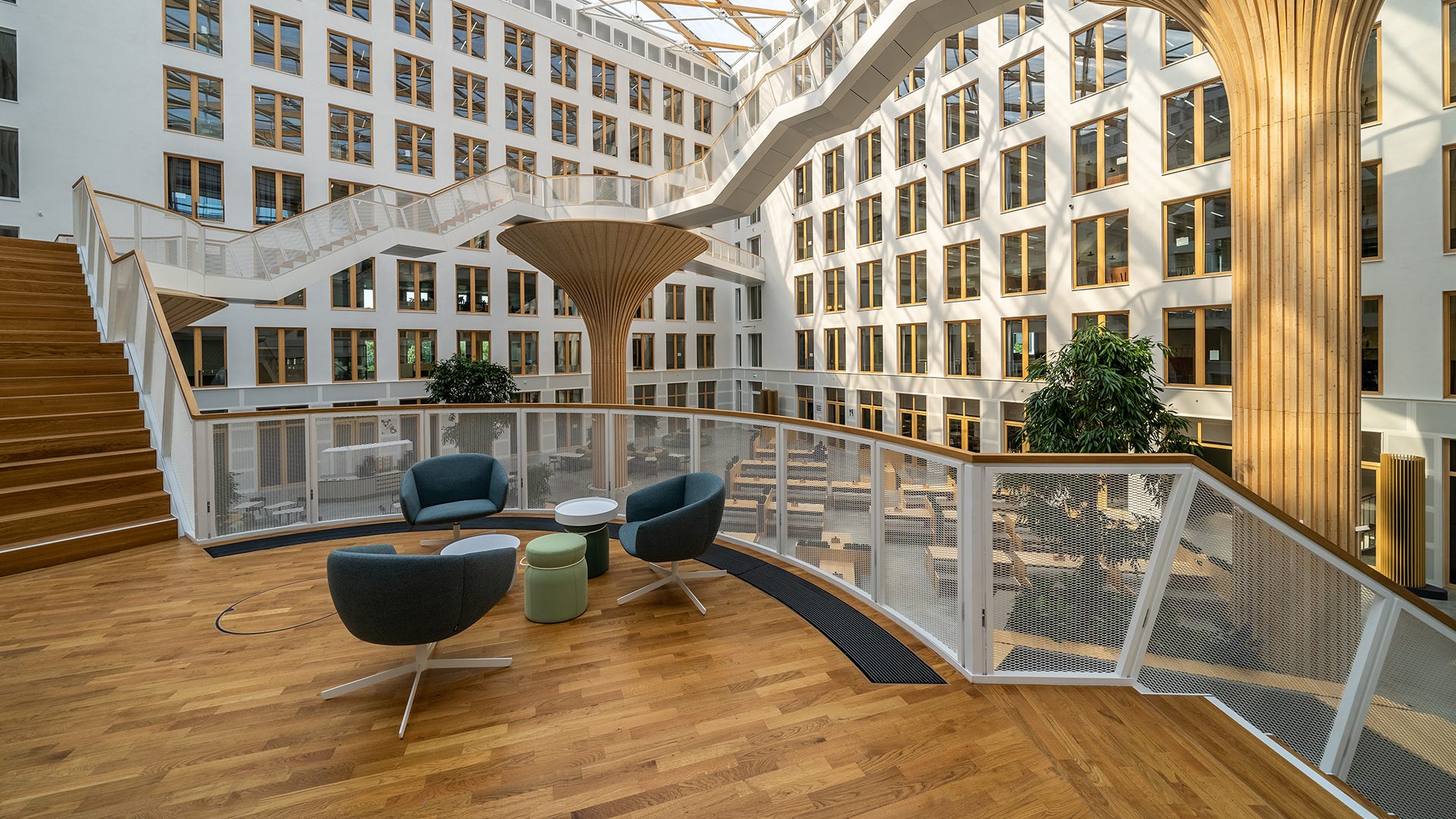
Supporting brown-to-green commercial office conversions in Europe
A fund managed by Macquarie Asset Management has invested in Edge, a
real estate developer implementing an innovative approach to sustainable development with a strategy of repositioning existing office stock in European cities
Swipe for more
| Sector | Infrastructure |
| Sub-sector | Real estate |
| Location | Europe |
Opportunity
Europe's office sector is facing a widening gap between outdated building stock and demand for sustainable, high-quality workplaces.
Buildings account for approximately 37 per cent of global energy CO2 emissions,1 and 76 per cent of European office stock is at risk of becoming obsolete by 2030.2 Unless landlords actively invest in improving asset quality, much of the market is exposed to rising energy costs, evolving regulation and increasing obsolescence risk.
At the same time, tenants and investors are placing greater emphasis on sustainability, while regulations such as the European Union's revised Energy Performance of Buildings Directive3 are raising expectations around energy efficiency and carbon performance.
This convergence of ageing assets, regulatory change and shifting occupier demand is creating a compelling opportunity to reposition existing buildings through brown-to-green conversions, enhancing both environmental performance and long-term asset value.
Approach
In 2022, a fund managed by Macquarie Asset Management (MAM) invested in Edge, a Dutch real estate developer with more than 25 years of experience delivering sustainable, technology-enabled workplaces.
Together, MAM and Edge are pursuing a brown-to-green strategy that transforms existing office buildings into lower-carbon, future-fit workplaces. Rather than demolishing and rebuilding, Edge targets well-located assets at risk of obsolescence and repositions them through sustainability-led redevelopment.
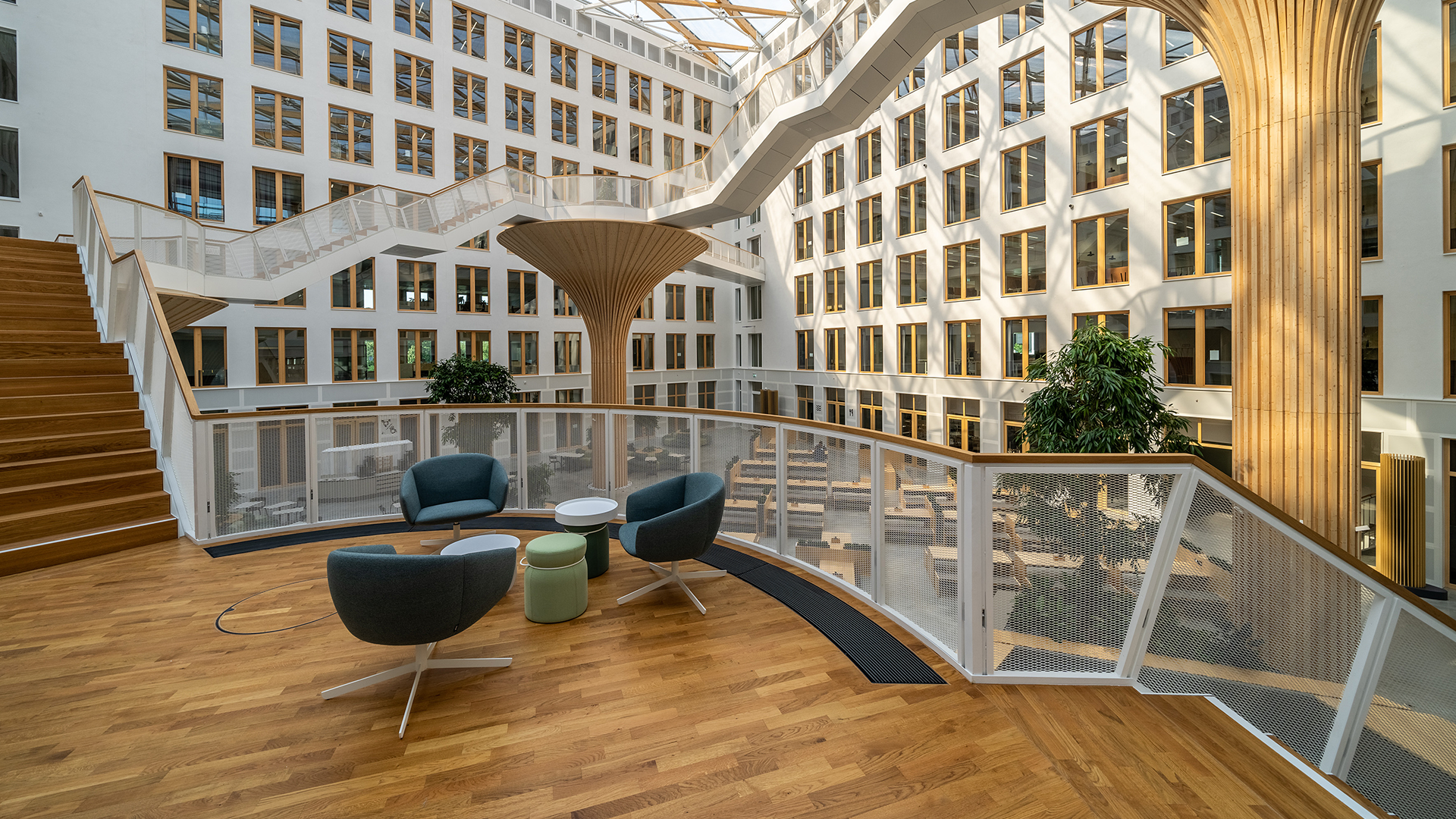
Drawing on its expertise in sustainable development, Edge enhances building performance through energy-efficiency measures such as low-carbon heating and cooling systems, along with deploying smart technologies and workplace enhancements aligned with modern occupier needs.
A key differentiator is Edge's proprietary ‘Next Sense’ platform, which uses sensors, data analytics and AI to continuously optimise building performance, helping reduce energy consumption and support long-term operational efficiency.
The strategy is supported by a commitment to reduce embodied and operational carbon across new and redeveloped projects by at least 50 per cent against industry benchmarks by 2030, with a pathway to absolute zero carbon by 2050.4
Outcome
Today, Edge is active across five European markets, with €5.4 billion of projects under development or management.5
The platform's growth reflects both organic expansion and increasing institutional investor demand. In 2025, Edge secured €456 million of asset management mandates from German institutional investors, supporting its evolution from a specialist developer into an integrated real estate platform spanning development, investment and asset management.6
The strategy's impact is reflected in the performance of Edge's development portfolio. Across reported projects, Edge has achieved an average base building energy intensity of 26 kilowatt-hours per square metre per year - less than half its Paris Proof benchmark of 70 kWh/m² - while 100 per cent of reported projects incorporate onsite renewable energy generation.7

25+ years
Edge's operating history

€5.4b
Projects under development or management

50 per cent
Emissions reduction target by 2030

As a growing share of Europe's office stock approaches obsolescence, repositioning existing buildings rather than replacing them is often the more sustainable and economical path. Edge is able to execute this strategy by leveraging over two decades of delivering new and innovative approaches to creating low-carbon, high-performing workplaces.”
Brendan Jones
Head of EMEA Real Estate
Macquarie Asset Management
1. United Nations Environment Programme (UNEP), Building Materials and the Climate: Constructing a New Future, 2023.
2. Cushman & Wakefield, Rethinking European Offices 2030: Risks and Opportunities from Obsolescence, 2024.
3. European Parliament and Council of the European Union. Directive (EU) 2024/1275 of the European Parliament and of the Council of 24 April 2024 on the energy performance of buildings (recast). Official Journal of the European Union, L 1275.
4. Edge, 2025 Sustainability Report.
5. As at 30 June 2026, Edge.
6. Edge, Edge secures €456 million asset management mandates with German pension funds, 17 September 2025.
7. Edge, 2025 Sustainability Report.