
Perspectives
Beyond buyouts: How infrastructure debt is broadening the opportunity set in private credit
Private credit's growth has largely been portrayed as a direct lending story, but infrastructure debt is rapidly broadening the opportunity set beyond traditional sponsor-backed lending.
Focused on the build-out of physical assets, infrastructure debt offers investors access to a $US150 trillion capex supercycle1 supported by long-term structural demand drivers.
One of the fastest-expanding segments of private credit, infrastructure debt carries unique risk-return characteristics, demanding a combination of deep operational infrastructure experience and credit expertise from investors to succeed.
Macquarie Asset Management has been investing in infrastructure debt for more than 20 years, completing more than 300 transactions to become one of the world’s largest infrastructure debt managers.2
3 November 2026
Global infrastructure investment is forecast to reach $US150 trillion between 2024 and 2050 - in real terms, double what was spent over the previous 20 years.1
This capex supercycle is driven by a series of powerful structural demand drivers as populations and economies outgrow the power grids, water systems and transport networks that were designed for a less populous and digital world. It also reflects a shift in national priorities: energy security, technological leadership and supply chain resilience now sit high on government agendas and are increasingly treated as strategic imperatives.
With fiscal capacity constrained and the capital requirement likely to outpace what banks and public balance sheets can supply, infrastructure debt can help close the gap. Already one of private credit's fastest-expanding segments, it can offer prescribed, cycle-resilient income and portfolio diversification. Unlike many traditional forms of private credit, infrastructure debt is frequently secured by essential assets whose cash flows are linked to the ongoing provision of critical services.
While the scale of the opportunity is indisputable, the challenge for investors is understanding how to access it.
Investor snapshot
47 %
expect to raise their infrastructure debt allocations this year, ahead of direct lending (39 per cent) and asset-based lending (35 per cent)
53 %
expect infrastructure debt to offer the best risk-adjusted returns over the next three years
Source: Benefit Street Partners3
 Image source: CVE
Extending the private credit universe
Private credit is often associated with direct lending, typically loans to businesses backed by private equity sponsors. While infrastructure debt offers many of the same characteristics - direct relationships, bespoke structures, negotiated protections - it finances a different opportunity set: essential infrastructure assets that underpin economies and communities.
Evolving from a market dominated by banks before many retrenched following the 2008 global financial crisis, infrastructure debt now spans long-dated, investment-grade project finance through to higher-yielding, sub-investment-grade credit.4 It offers investors exposure to multiple global, structural thematics across digitalisation, decarbonisation, deglobalisation and demographics.
While the opportunity set is diverse, the assets financed by infrastructure debt all benefit from a consistent set of economic characteristics. These are sometimes summarised by acronym HALOID: hard assets, low obsolescence and inelastic demand.
HA
Hard Assets
Deliver essential societal economic services
LO
Low Obsolescence
High barriers to entry and long cycle relevance
ID
Inelastic Demand
Benefit from long-term demand drivers
Managing risk in the era of build-outs
While HALOID assets can offer highly resilient cash flows, they are not automatically low risk. As opportunities widen across the risk spectrum, seniority in the capital structure alone is no longer sufficient protection.
Successful execution depends on operational infrastructure experience and credit expertise working together. Lenders require a deep understanding of how an asset will develop, what could go wrong and what remedies and controls are available if it does. Knowledge of contractor and construction markets, power pricing, supply chains, operating costs, asset utilisation, and technological and regulatory change must sit alongside a proven track record in structuring, documentation, capital structure analysis and workout experience.
The benefits of this combined expertise go beyond efficient execution: they determine the quality of assets that can be accessed and enable investors to identify opportunities long before they reach a wider, more competitive market.
The Macquarie Asset Management toolkit
At Macquarie Asset Management (MAM), our approach is defined by three core capabilities: asset expertise, structuring discipline, and origination.
Asset expertise
We are a leading global asset manager, with more than 30 years of experience managing infrastructure assets.5 Our investments underpin economies, communities and households around the world, and are relied on by more than 310 million people every day.6 This operational expertise has been central to our ability to successfully complete more than 300 infrastructure debt transactions across 31 countries, making us one of the largest infrastructure debt managers globally.7
Four different assets, four different drivers, and yet each respond to the same underlying pressure: capacity that needs to be built faster than the public sector alone can finance it.

CVE
€350 million financing
Supported a French solar platform with more than 1 GW of capacity in operation and under construction with the continued build-out of its portfolio and simplification of its capital structure.8

Nexamp
$US350 million facility
Supported the construction of a 6 GW pipeline of US utility-scale solar and battery storage projects, backing supply as demand for electricity continues to outpace it.9

Eurofiber
€125 million senior loan
Part of a ~€2.2 billion refinancing, supporting the expansion of Eurofiber’s 77,500 km fibre network and data centres across the Netherlands, Belgium, Luxembourg, France and Germany, serving hyperscale and enterprise customers directly.10

UK housing
£1.45 billion+ debt facilities
Provided to UK local authorities and housing associations since 2015, including financing linked to energy efficiency improvements across more than 1,100 homes, as public bodies look to deleverage and modernise ageing stock.11
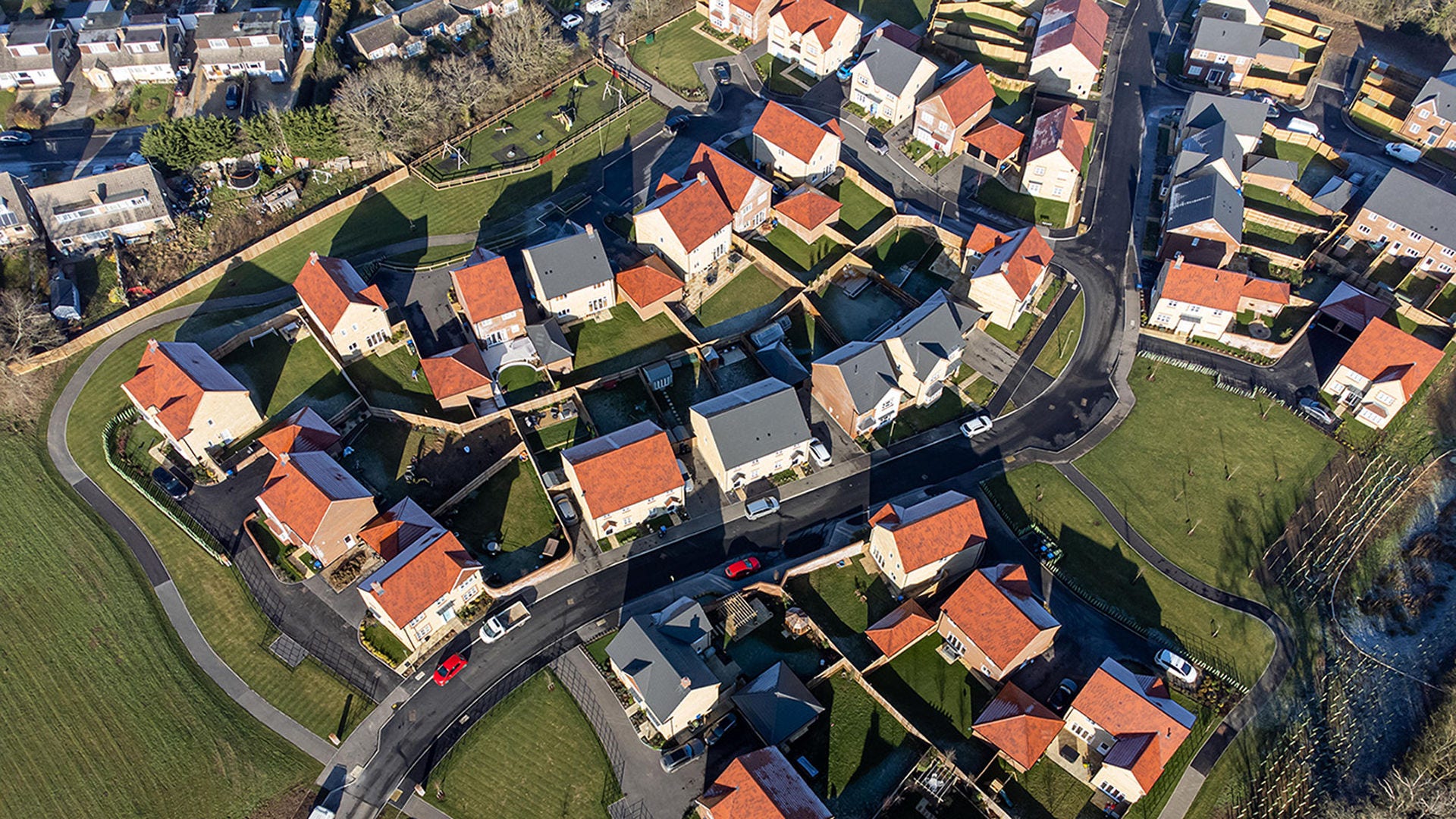 Image source: Cottsway Housing Association
Structuring discipline
Two data centres can carry very different credit risk despite benefiting from the same AI tailwinds, depending on power access, tenant commitments and location. MAM’s underwriting framework, refined across our long track-record and multiple credit cycles, is what allows us to differentiate between them. Our investments are structured around seniority, equity cushions, covenants and step-in rights, rather than assuming a strong investment thematic is protection enough.
Origination
As one of the world's largest infrastructure managers, MAM combines deep asset expertise with a global infrastructure platform spanning equity and debt investing. Our $US242 billion infrastructure equity platform works alongside our $US161 billion Credit & Insurance business, providing differentiated access to infrastructure financing opportunities globally.
Across our infrastructure debt track record, more than 95 per cent of transactions have been sourced bilaterally or through club deals, rather than through syndication.12 That combination enables us to surface bilateral and proprietary financing opportunities that would not otherwise reach the market, with us often acting as lead or sole lender. It also gives clients one point of access to both equity and debt capital, which can enhance sourcing, diligence and structuring capabilities, rather than working with each capability separately.

Tom van Rijsewijk
Head of Infrastructure and Investment Grade Private Credit - EMEA
Macquarie Asset Management
As infrastructure debt continues to expand the opportunity set across private credit, accessing it successfully isn't just about sourcing deals. It is also about identifying investments with resilient downside characteristics and contractual cash flows. It requires the operational judgement to know which assets will perform and the credit discipline to structure around what could go wrong.
With over 20 years and more than 300 transactions across 31 countries, MAM brings both.13 As the infrastructure capex supercycle accelerates, we're well placed to help investors build considered exposure to it.
- ‘Global Infrastructure Outlook 2025-50’, PwC, 28 April 2026.
- The figures represent investments made by the MAM Private Credit Infrastructure Debt team and MAM Private Credit Asset Finance (the balance sheet team), completed since 2005.
- ‘2026 Alternative Credit Survey’, Benefit Street Partners, 11 February 2026.
- ‘Macquarie Asset Management: A golden age for infrastructure debt?’, Infrastructure Investor, 1 July 2026.
- ‘Top 100 Infrastructure Investment Managers’, IPE Real Assets, July/August 2026.
- As at 31 March 2025. Number of people reached is calculated by taking an estimate of the number of users for all MAM Real Assets portfolio companies. Examples include a specific toll road where the number of vehicles per day has been multiplied by the average number of passengers in a vehicle (average passengers in a vehicle is ~2, not dependent on country); a particular power generation asset where the amount of GWh it generates per year is divided by the average power consumption in the country where the asset is located. Portfolio company data is collected from MAM’s asset management teams on a bi-annual basis.
- The figures represent investments made by the MAM Private Credit Infrastructure Debt team and MAM Private Credit Asset Finance (the balance sheet team), completed since 2005. Infrastructure Debt 30, Infrastructure Investor, 6 July 2026; Infrastructure Debt Manager of the Year by Alternative Credit Investor (2024); second place in the Infrastructure Debt Fund Managers by Infrastructure Investor (2025).
- Macquarie Group, ‘Macquarie Asset Management provides €350 million financing to CVE to optimise its capital structure and support the growth of its solar business’, July 2026.
- Macquarie Group, ‘Macquarie Asset Management Commits $US350 Million to Support Nexamp in Its U.S. Utility-Scale Solar and Battery Storage Expansion’, September 2025.
- Macquarie Group, ‘Macquarie Asset Management provides €125 million debt financing to Eurofiber’, August 2025.
- ‘Advancing UK social housing through decarbonisation and safety upgrades’, Macquarie Asset Management, 2025.
- Macquarie Asset Management. Based on 351 investments made by the MAM Private Credit Infrastructure Debt team and MAM Private Credit Asset Finance (the balance sheet team), completed between 2005 and September 2025. Measured by number of transactions. Includes transactions originated through the investment team’s sponsor, advisor and broker relationships, Macquarie, clients and strategic partners, and club transactions, including secondary acquisitions not made as part of a syndication process. Excludes syndicated transactions and unsolicited third-party approaches.
- The figures represent investments made by the MAM Private Credit Infrastructure Debt team and MAM Private Credit Asset Finance (the balance sheet team), completed since 2005.


Learn more