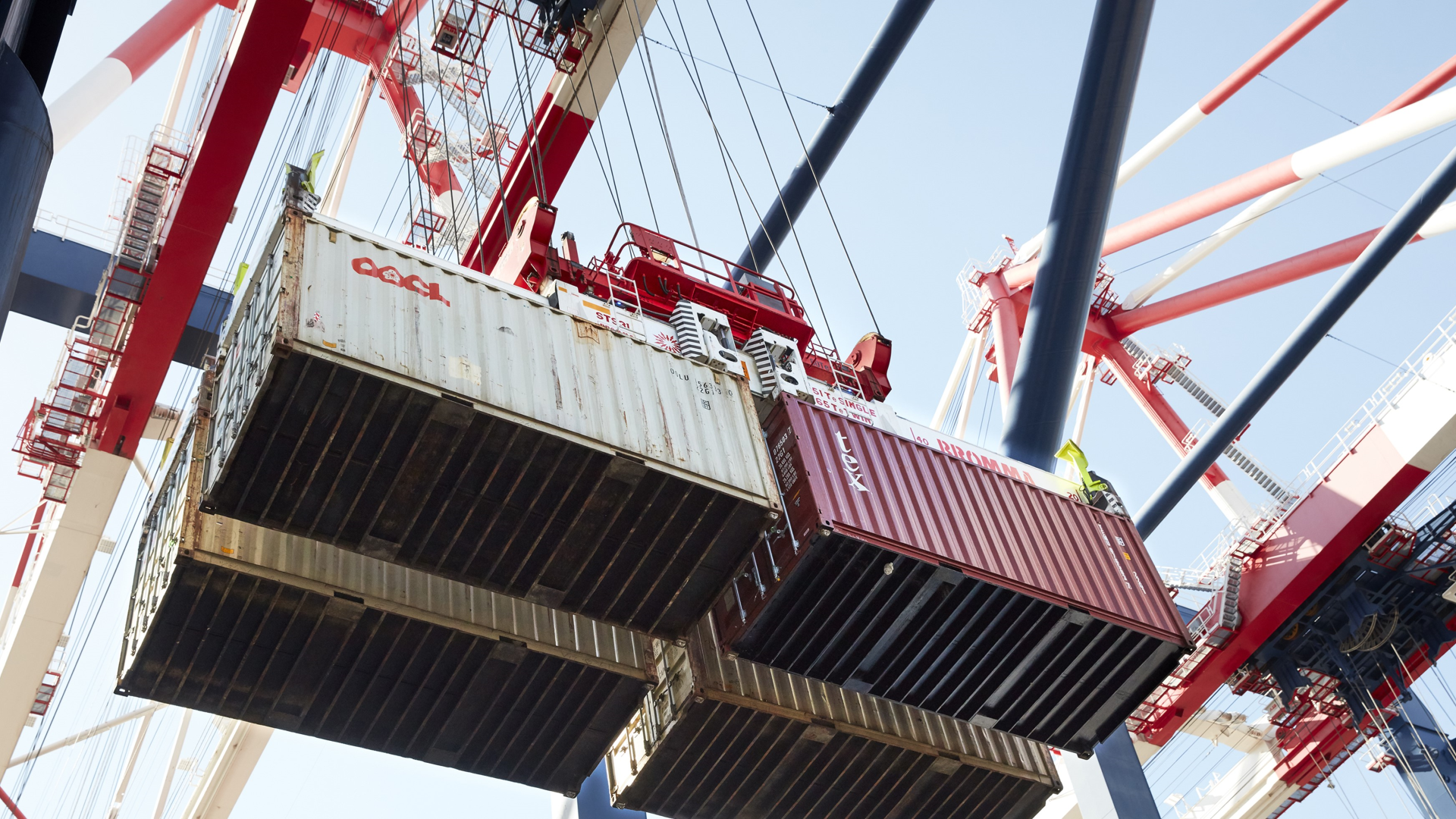
Cargo containers being lifted by crane

Insights

Structural trends driving today's infrastructure opportunity

A powerful set of long-term forces is driving renewed demand for infrastructure worldwide. These are not short-term cycles – they reflect lasting shifts in how economies operate, how people live and work, and how essential services are delivered. Together, they are creating one of the most significant investment opportunities infrastructure has seen in decades.

The rapid expansion of the digital economy is driving a step change in demand for infrastructure that underpins data creation, storage, and transmission. Cloud computing, rising data consumption and increasingly power intensive AI workloads are accelerating investment across data centres, fibre networks, and connectivity assets. Crucially, this digital build out also has significant downstream implications for power infrastructure, as electricity demand rises to support always on, high availability digital systems. As economies become more data driven, infrastructure that enables secure, reliable, and scalable digital activity is becoming ever more essential.


Figure 1: Global data centre generation
Annual data created, captured, copied and consumed worldwide (Zettabytes), with estimates from 2026 onward

Source: IDC, "Worldwide Global DataSphere Structured and Unstructured Data Forecast, 2024–2028”, September 2024; Kioxia Holdings, "Integrated Report 2025", October 2025

Chart takeaway: Cloud computing, AI workloads, and always-on digital systems are expected to drive a ~2.5x increase in global data generation from 2025 to 2029 – accelerating demand for data centres, fibre networks and the power infrastructure to support them, making digitisation one of the most significant structural themes in infrastructure today.


The global shift toward cleaner energy systems, alongside the electrification of transport, industry and computing, is transforming how electricity is generated, stored, and delivered. After decades of relatively flat electricity consumption in many developed markets, demand is now rising as electric vehicles, electrified industrial processes and digital technologies gain scale. This transition is driving sustained investment across renewable generation, storage, grid reinforcement, and flexibility solutions. Importantly, the opportunity is not confined to a single technology or phase of the transition but spans the full power value chain as energy systems adapt to meet changing demand patterns.


Figure 2: Global electricity demand by sector
Terawatt-hours (TWh), historical demand with sector-level forecasts to 2030

Source: BNEF, "New Energy Outlook 2025: Data Viewer (1.4)", April 2025; IEA, " Energy and AI", April 2025.

Chart takeaway: The electrification of transport and industry, alongside the rapid growth of power-intensive computing, is transforming how electricity is generated, stored and delivered – driving sustained investment across the full power value chain, from renewable generation and storage to grid reinforcement and flexibility solutions, as energy systems adapt to meet changing demand patterns.


Geopolitical shifts and lessons learned from recent supply chain disruptions are prompting governments and corporates to reassess how critical goods and services are produced and distributed. Greater emphasis on domestic resilience, energy security and supply chain reshoring is increasing infrastructure investment needs across transportation networks, utilities, logistics assets, and industrial infrastructure. These trends are supporting demand for assets that enhance redundancy, reliability, and local capacity – characteristics that align closely with infrastructure’s role as the backbone of economic activity.


Figure 3: Global trade as a share of GDP
Trade (export + imports) as a % of global GDP – three distinct eras of globalisation

Source: Macrobond

Chart takeaway: Despite a post-pandemic rebound, the long-run trend in global trade as a share of GDP is under pressure as geopolitical shifts and supply chain disruptions push governments and corporates to reshore critical production. This is increasing infrastructure investment needs across transportation networks, utilities, logistics and industrial assets – with a premium on redundancy, reliability and local capacity.  


Population growth, urbanisation and shifting consumption patterns continue to create new infrastructure requirements across cities and essential services. Expanding urban centres require investment in power, transport, utilities, and social infrastructure, while changing household and business needs are reshaping how infrastructure assets are used. At the same time, economic development and rising living standards in many regions are increasing per capita demand for energy, connectivity, and services, reinforcing the long-term need for infrastructure investment.


Figure 4: Global urban and rural population growth 1960 – 2050
Total population in billions, with projections from 2024 onward

 Source: World Bank – Population Estimates and Projections, December 2025

Chart takeaway: Urbanisation, migration and rising living standards are increasing per capita demand for energy, transport and services. By 2050, 2 in 3 people are projected to live in cities, reinforcing the long-term need for infrastructure investment.


Why expertise matters

While infrastructure offers compelling characteristics, the asset class is inherently complex. Assets can vary significantly by region, regulatory framework, stakeholder environment, and underlying business model, with outcomes often shaped by local market dynamics rather than broad macro trends alone.

As a result, specialised experience – spanning asset origination, operational oversight, regulatory engagement, and capital markets – is often critical to identifying attractive opportunities, assessing risk appropriately and stewarding long-term value on behalf of investors. In an environment where infrastructure demand is being driven by multiple overlapping structural forces, disciplined asset selection and active management play an increasingly important role in translating long-term themes into durable investment outcomes.

A sustained, multi-decade opportunity

Individually, each of these forces supports higher infrastructure demand. Taken together, they reinforce the view that infrastructure is entering a prolonged period of investment driven by structural – not cyclical – change. The scale, duration and essential nature of these trends underpin the long-term relevance of infrastructure assets within portfolios and help explain why private infrastructure continues to attract growing investor attention.

The bottom line: Together, these structural trends reinforce the case for private infrastructure as a long-term allocation.

By providing exposure to essential assets anchored in enduring demand drivers, private infrastructure offers the reliability and durability of cashflows that underpin its long-term relevance within portfolios – and the ability to actively manage complexity means it remains well positioned to translate structural opportunity into resilient investment outcomes.


About Macquarie Asset Management

For over 30 years, we have been a recognised industry leader with a long-standing history in infrastructure investing. Relentlessly focused on investing to deliver superior results and positive impact for our clients, portfolio companies, communities and those whose savings we’re trusted to manage.

Contact us

Connect with our wealth team

Access high quality private markets investments through our leading global platform.

The opinions expressed are those of the author(s) as of the date indicated and may change based on market and other conditions. The accuracy of the content and its relevance to your client’s particular circumstances is not guaranteed.

This market commentary has been prepared for general informational purposes by the team, who are part of Macquarie Asset Management (MAM), the asset management business of Macquarie Group (Macquarie), and is not a product of the Macquarie Research Department. This market commentary reflects the views of the team and statements in it may differ from the views of others in MAM or of other Macquarie divisions or groups, including Macquarie Research. This market commentary has not been prepared to comply with requirements designed to promote the independence of investment research and is accordingly not subject to any prohibition on dealing ahead of the dissemination of investment research.

Nothing in this market commentary shall be construed as a solicitation to buy or sell any security or other product, or to engage in or refrain from engaging in any transaction. Macquarie conducts a global full-service, integrated investment banking, asset management, and brokerage business. Macquarie may do, and seek to do, business with any of the companies covered in this market commentary. Macquarie has investment banking and other business relationships with a significant number of companies, which may include companies that are discussed in this commentary, and may have positions in financial instruments or other financial interests in the subject matter of this market commentary. As a result, investors should be aware that Macquarie may have a conflict of interest that could affect the objectivity of this market commentary. In preparing this market commentary, we did not take into account the investment objectives, financial situation or needs of any particular client. You should not make an investment decision on the basis of this market commentary. Before making an investment decision you need to consider, with or without the assistance of an adviser, whether the investment is appropriate in light of your particular investment needs, objectives and financial circumstances.

Macquarie salespeople, traders and other professionals may provide oral or written market commentary, analysis, trading strategies or research products to Macquarie’s clients that reflect opinions which are different from or contrary to the opinions expressed in this market commentary. Macquarie’s asset management business (including MAM), principal trading desks and investing businesses may make investment decisions that are inconsistent with the views expressed in this commentary. There are risks involved in investing. The price of securities and other financial products can and does fluctuate, and an individual security or financial product may even become valueless. International investors are reminded of the additional risks inherent in international investments, such as currency fluctuations and international or local financial, market, economic, tax or regulatory conditions, which may adversely affect the value of the investment. This market commentary is based on information obtained from sources believed to be reliable, but we do not make any representation or warranty that it is accurate, complete or up to date. We accept no obligation to correct or update the information or opinions in this market commentary. Opinions, information, and data in this market commentary are as of the date indicated on the cover and subject to change without notice. No member of the Macquarie Group accepts any liability whatsoever for any direct, indirect, consequential or other loss arising from any use of this market commentary and/or further communication in relation to this market commentary. Some of the data in this market commentary may be sourced from information and materials published by government or industry bodies or agencies, however this market commentary is neither endorsed or certified by any such bodies or agencies. This market commentary does not constitute legal, tax, accounting or investment advice. Recipients should independently evaluate any specific investment in consultation with their legal, tax, accounting, and investment advisors. Past performance is not indicative of future results.

This market commentary may include forward-looking statements, forecasts, estimates, projections, opinions and investment theses, which may be identified by the use of terminology such as “anticipate”, “believe”, “estimate”, “expect”, “intend”, “may”, “can”, “plan”, “will”, “would”, “should”, “seek”, “project”, “continue”, “target” and similar expressions. No representation is made or will be made that any forward-looking statements will be achieved or will prove to be correct or that any assumptions on which such statements may be based are reasonable. A number of factors could cause actual future results and operations to vary materially and adversely from the forward-looking statements. Qualitative statements regarding political, regulatory, market and economic environments and opportunities are based on the team’s opinion, belief and judgment.

Other than Macquarie Bank Limited ABN 46 008 583 542 (“Macquarie Bank”), any Macquarie Group entity noted in this document is not an authorised deposit-taking institution for the purposes of the Banking Act 1959 (Commonwealth of Australia). The obligations of these other Macquarie Group entities do not represent deposits or other liabilities of Macquarie Bank. Macquarie Bank does not guarantee or otherwise provide assurance in respect of the obligations of these other Macquarie Group entities. In addition, if this document relates to an investment, (a) the investor is subject to investment risk including possible delays in repayment and loss of income and principal invested and (b) none of Macquarie Bank or any other Macquarie Group entity guarantees any particular rate of return on or the performance of the investment, nor do they guarantee repayment of capital in respect of the investment.

Past performance does not guarantee future results.

Diversification may not protect against market risk.

Market risk is the risk that all or a majority of the securities in a certain market – like the stock market or bond market – will decline in value because of factors such as adverse political or economic conditions, future expectations, investor confidence, or heavy institutional selling.

International investments entail risks including fluctuation in currency values, differences in accounting principles, or economic or political instability. Investing in emerging markets can be riskier than investing in established foreign markets due to increased volatility, lower trading volume, and higher risk of market closures. In many emerging markets, there is substantially less publicly available information and the available information may be incomplete or misleading. Legal claims are generally more difficult to pursue.

Currency risk is the risk that fluctuations in exchange rates between the US dollar and foreign currencies and between various foreign currencies may cause the value of an investment to decline. The market for some (or all) currencies may from time to time have low trading volume and become illiquid, which may prevent an investment from effecting positions or from promptly liquidating unfavourable positions in such markets, thus subjecting the investment to substantial losses.

Credit risk is the risk of loss of principal or loss of a financial reward stemming from a borrower’s failure to repay a loan or otherwise meet a contractual obligation. Credit risk arises whenever a borrower expects to use future cash flows to pay a current debt. Investors are compensated for assuming credit risk by way of interest payments from the borrower or issuer of a debt obligation. Credit risk is closely tied to the potential return of an investment, the most notable being that the yields on bonds correlate strongly to their perceived credit risk.

Index performance returns do not reflect any management fees, transaction costs or expenses.

Indices are unmanaged and one cannot invest directly in an index.

Macquarie Group, its employees and officers may act in different, potentially conflicting, roles in providing the financial services referred to in this document. The Macquarie Group entities may from time to time act as trustee, administrator, registrar, custodian, investment manager or investment advisor, representative or otherwise for a product or may be otherwise involved in or with other products and clients which have similar investment objectives to those of the products described herein. Due to the conflicting nature of these roles, the interests of Macquarie Group may from time to time be inconsistent with the interests of investors. Macquarie Group entities may receive remuneration as a result of acting in these roles. Macquarie Group has conflict of interest policies which aim to manage conflicts of interest.

All third-party marks cited are the property of their respective owners.

© 2026 Macquarie Group Limited

MCOL- 22973 - 3/2026

Macquarie Asset management is a leading global asset manager offering a diverse range of investment solutions, including real assets, real estate, and credit.


This information is a general description of Macquarie Asset management only. The views expressed in this website represent those of the relevant investment team and are subject to change. No information set out above constitutes advice, an advertisement, an invitation, a confirmation, an offer or a solicitation, to buy or sell any security or other financial product or to engage in any investment activity, or an offer of any banking or financial service. Some products and/or services mentioned on this website may not be suitable for you and may not be available in all jurisdictions.


Investing involves risk including the possible loss of principal. The investment capabilities described in this website involve risks due, among other things, to the nature of the underlying investments. All examples herein are for illustrative purposes only and there can be no assurance that any particular investment objective will be realized or any investment strategy seeking to achieve such objective will be successful. Past performance is not a reliable indication of future performance.


Before acting on any information, you should consider the appropriateness of it having regard to your particular objectives, financial situation and needs and seek advice.


Other than Macquarie Bank Limited ABN 46 008 583 542 (“Macquarie Bank”), any Macquarie Group entity noted in this website is not an authorized deposit-taking institution for the purposes of the Banking Act 1959 (Commonwealth of Australia).  The obligations of these other Macquarie Group entities do not represent deposits or other liabilities of Macquarie Bank.  Macquarie Bank does not guarantee or otherwise provide assurance in respect of the obligations of these other Macquarie Group entities.  In addition, if this website relates to an investment, (a) the investor is subject to investment risk including possible delays in repayment and loss of income and principal invested and (b) none of Macquarie Bank or any other Macquarie Group entity guarantees any particular rate of return on or the performance of the investment, nor do they guarantee repayment of capital in respect of the investment.


Additional important information (including regional disclosures)


[3246420]